Showing posts with label blockchain application development. Show all posts

Wednesday, 27 December 2023

Top Machine Learning Libraries In Java


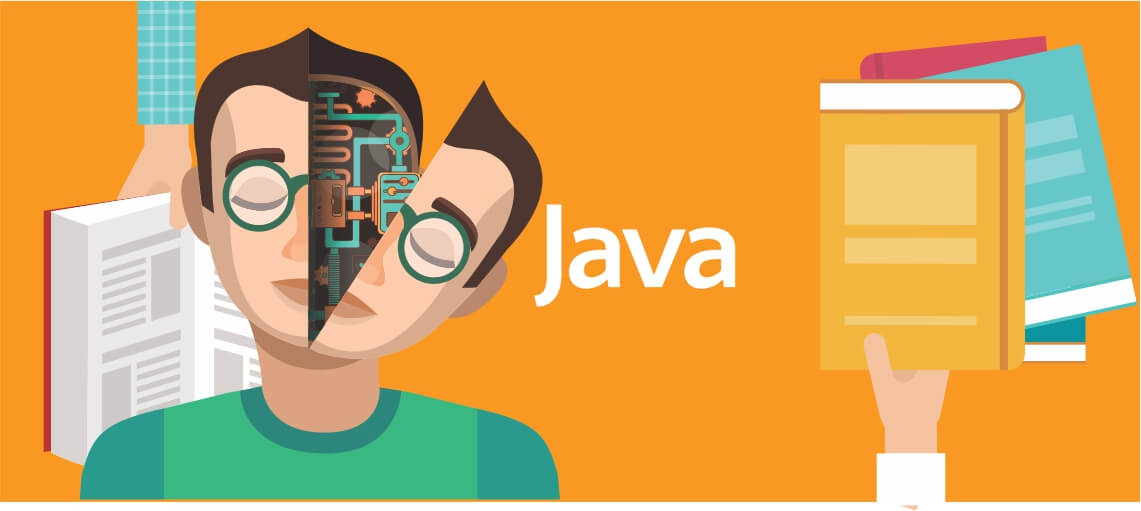
Java is the only general purpose programming language which finds wide use by developers for building secure enterprise grade applications, desktop applications, web applications, and mobile apps. Java 9 further helps developers to build applications for both large and small devices by providing a number of new features – a new module system, a new command line tool, and several updated APIs. At the same time, Java is currently one of the most popular programming languages for machine learning.
Machine Learning Libraries In Java

A large percentage of data scientists and machine learning developers prefer Java to other programming languages while improving network security, protect cyber attacks, and detect frauds. The language features available in Java makes it easier for programmers to write machine learning algorithms. The developers can accelerate custom machine learning application development by taking advantage of the Machine Learning libraries In Java.

Brief Overview of 10 Robust Machine Learning Libraries In Java

1) Java Machine Learning Library (Java-ML)

Java-ML is designed as a collection of machine learning algorithms. It even provides interface for various types of machine learning algorithms. By design, the library is a clear interface instead of graphical user interface. Hence, only skilled Java programmers and developers are able to use it . They have option to learn Java-ML by referring to its well-documented source code as well as tutorials and code samples.

2) Java Statistical Analysis Tool (JSAT)

The Java library for machine learning was developed by Edward Raff for self-education. JSAT still provides implementation of standard machine learning algorithms in pure Java. The developers can even use JSAT as a lightweight Java library without external dependencies. But they cannot use the library to solve complex machine learning project. JSAT still helps machine learning developers to sole small to medium size problems quickly.

3) Waikato Environment for Knowledge Analysis (Weka)

The machine learning algorithms provided by Weka helps developers to simplify a variety of data mining tasks. Weka even provides a number of tools for data pre-processing, classification, clustering, regression, and visualization. The developers even have option to use the machine learning algorithms provided by Weka to a dataset directly or call the algorithms from Java code. At the same time, the developers can also use Weka to create new machine learning schemas without putting extra time and effort.

4)  Konstanz Information Miner (KNIME)

KNIME was originally an analytics and reporting library. But KNIME is currently one of the most popular build software for advanced data science. The tools provided by KNIME help users to discover new potential hidden in data, mine data for fresh insights, and predict new future. The data scientists can use KNIME to integrate different types of data collected from various sources to widely used tools. At the same time, the software developers can use KNIME to connect applications to data sources by creating custom connectors, implement new algorithms, and create new data visualization.

5) Environment for DeveLoping KDD-Applications Supported by Index-Structures (ELKI)

The open source data mining software is written in Java programming language. But it is compiled with Python and Maven. Despite being designed as research software, ELKI is designed based on extensions. It allows developers to use algorithms, indexes, visualization, data types, and distance functions as extensions. However, ELKI allows developers to keep the data management tasks and data mining algorithms separated. The separation further makes it easier for programmers to evaluate data mining algorithms and data management tasks independently.

6) RapidMiner

The commercial data science platform is currently being used by large enterprises like Samsung, GE, SalesForce, Cisco, Hitachi and Siemens. RapidMiner comes with a set of features and tools to simplify various tasks performed by data scientists. It even uses automated machine learning to speed up and simplify various data science projects. The data scientists can use RapidMiner Studio to create visual workflow, RapidMiner Server to simplify model deployment and management, and RapidMiner Radoop to implement code free data science.

7) Massive Online Analysis (MOA)

The widely used data stream mining framework comes with a number of machine learning algorithms and tools to evaluate the algorithms. While using MOA, developers can avail a variety of machine learning algorithms – classification, clustering, regression, concept drift detection, outlier detection, and recommender system. The developers can use MOA to perform real-time big data streaming and large scale machine learning. They even have option to extend and scale the Java-based framework to meet complex project needs.

8) Eclipse Deeplearning4j

Deeplearning4j is a Java based platform. The distributed deep learning library is compatible with a number of JVM-based programming languages – Kotlin, Scala and Clojure. Also, Deeplearning4j finds extensive use as a scalable and open source distribution library in varied business environments on distributed CPUs and GPUs. It even features micro-service architecture and takes advantage of a robust distributed computing framework like Hadoop. The developers can even avail the tools provided by Deeplearning4j to perform machine learning ETL operations, evaluate machine learning algorithms, and integrate Java and native C++.

9) Mallet

Mallet is designed as a Java-based package for a variety of machine learning applications to text. The sophisticated tools available in Mallet make it easier for developers to simplify document classification, sequence tagging, topic modelling, and numerical optimization. At the same time, Mallet transforms text documents into numerical representation efficiently and flexibly through a system of pipes. The user can even extend Mallet through add-on packages to meet complex project needs.

10) Encog Machine Learning Framework

In addition to supporting advanced machine learning algorithms, Encog also supports classes for data normalization and processing. The framework further provides multi-threaded training algorithms that can scale according to multicore hardware. Encog makes it easier for programmers to model and train machine learning algorithms by providing a GUI-based workbench. It supports an array of standard machine learning algorithms including neural networks, genetic programming, Bayesian networks, hidden Markov models, and support vector machine.

On the whole, the Java developers have option to choose from a wide range of Java libraries for machine learning. Some of these libraries are machine learning development platforms, whereas others provide a collection of machine learning algorithms. Hence, the developers must keep in mind the precise needs of each project while comparing these widely used machine learning libraries for Java programming language.

Friday, 8 December 2023

Challenges and Considerations in AI-Driven Test Automation

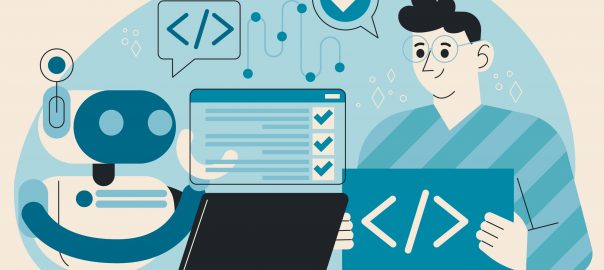
As the field of software testing continues to evolve, organizations are increasingly exploring the potential of artificial intelligence (AI) in test automation. AI-driven test automation promises enhanced efficiency, accuracy, and coverage in software testing processes. However, implementing AI in test automation comes with its own set of challenges and considerations. In this blog post, we will delve into the key challenges and considerations when incorporating AI into test automation, including data quality, model interpretability, ethical considerations, and the balance between human expertise and automated approaches.

test automation

Data Quality

One of the fundamental requirements for successful AI-driven test automation is high-quality data. AI models heavily rely on training data to learn patterns and make predictions. Therefore, organizations need to ensure that the data used to train AI models is accurate, diverse, and representative of the system being tested. Poor data quality, such as incomplete or biased data, can lead to unreliable or skewed results.

To address data quality challenges, organizations should invest in data collection and preprocessing techniques that maintain data integrity and diversity. Data validation processes should be implemented to identify and rectify any anomalies or biases. Moreover, organizations should continuously monitor and update their data sets to reflect the evolving nature of the software systems under test.


Model Interpretability

In the realm of AI-driven test automation, one of the key challenges that organizations face is model interpretability. While AI models can offer remarkable accuracy and efficiency in software testing, their inner workings often remain obscure and difficult to comprehend. This lack of transparency poses a significant hurdle in building trust and understanding the decisions made by AI models.

To address the challenge of model interpretability, organizations must prioritize the use of AI models that can provide human-understandable explanations for their decisions. Techniques such as explainable AI (XAI) are emerging to bridge this gap by shedding light on the reasoning behind AI model outputs. By utilizing XAI methods, testers and stakeholders can gain insights into how the model arrived at its conclusions.

There are several approaches to achieving model interpretability. One approach is to use simpler and more transparent models, such as decision trees or rule-based systems, which are inherently interpretable. While these models may not offer the same level of accuracy as complex neural networks, they provide a clear understanding of how input data influences the output.

Another approach involves post-hoc interpretation techniques that aim to explain the behavior of complex AI models. These techniques include generating feature importance scores, visualizing activation patterns, or creating saliency maps to highlight the significant factors that contribute to the model’s decision-making process.

By ensuring model interpretability, organizations can build trust in the results produced by AI-driven test automation. Testers and stakeholders can gain confidence in understanding why certain defects were identified or missed, enabling them to make informed decisions based on the AI model’s outputs. Ultimately, model interpretability contributes to more effective and reliable software testing processes.


Ethical Considerations

AI-driven test automation raises ethical considerations that organizations must carefully address. Testing AI systems themselves requires a thorough understanding of the ethical implications surrounding AI technologies. Testers should be aware of potential biases, privacy concerns, and the ethical use of user data in the testing process.

Organizations should establish ethical guidelines and frameworks to ensure responsible and fair use of AI in test automation. This may involve adhering to relevant regulations, conducting ethical reviews of AI models, and implementing mechanisms for addressing potential biases and discrimination. It is crucial to prioritize transparency, accountability, and user consent when collecting and using data for testing AI systems.


Balancing Human Expertise with Automated Approaches

While AI-driven test automation offers significant benefits, it is important to strike a balance between automated approaches and human expertise. AI models excel at handling large-scale data analysis and repetitive tasks, but human testers possess critical domain knowledge, intuition, and creativity that AI cannot replicate.

Organizations should recognize that AI-driven test automation is a complementary tool to human expertise, rather than a complete replacement. Human testers play a vital role in designing test scenarios, validating results, and making critical decisions based on context and intuition. Collaboration between AI models and human testers ensures a holistic approach to software testing and maximizes the effectiveness of the testing process.


The Future Ahead

AI-driven test automation holds great promise for enhancing the efficiency and effectiveness of software testing. However, organizations must be aware of the challenges and considerations that come with its implementation. By addressing issues related to data quality, model interpretability, ethical considerations, and the balance between human expertise and automated approaches, organizations can navigate the complexities of AI-driven test automation and unlock its full potential. By doing so, they can improve the quality of their software products, streamline their testing processes, and gain a competitive edge in the rapidly evolving digital landscape.

Tuesday, 7 November 2023

LEARNING MANAGEMENT SYSTEM


Executive Summary

The primary focus of our client was to create an e-learning management system which could help the people to develop knowledge and keep themselves safe at all times while driving .For over few years, our client has been delivering messages to the youth market. They focused primarily on kids and were inclined towards motivating and finding ways to excite them. They wanted to combine talent and creative ideas of people with a unique application which could produce solutions. Their aim was to incorporate attractive features in the application which could make it unique, user friendly and interactive by nature .They were concerned too much about this application as it was to be used by kids who comprised of major part of the population. For this they were searching for development partner. To achieve what they aimed, the client firm approached Mindfire and informed us about their requirement. Mindfire responded positively and took the responsibility to provide the best and unique solution that could cater to the youth market.

About our Client

Client: Risk Management Company

Location: NJ, USA

Industry Risk Management

Business Situation

E-Leanring-1

Realizing the need for an e-learning information system which could help the client to promote their business over internet on large scale, the client firm contacted Mindfire Solutions. They focused on kids who covered a large part of the population. They primarily aimed to develop knowledge through high quality e-learning application which people can use to share and exchange ideas .They wanted to conduct online quiz to make education much more effective and hence, giving great experience to the users. This made the client search for a good offshore partner who could consolidate their thoughts and ideas into a unique working application. A team of developers from Mindfire Solutions brainstormed through the specification documents of the client and started analyzing it. A design was then proposed after discussion among the team and with the client’s approval, the existing functionality of the web application were analyzed and ported onto the desktop version.

Technologies

Flash CS3, ActionScript 3.0, XML, PHP

Download Full Case Study

Thursday, 26 October 2023

What Makes Salesforce Health Cloud Ideal for Healthcare Providers?


Staying connected with patients and managing health data effectively is important for all healthcare providers. They must also provide personalized care during a time when everyone is giving extreme importance to patient care. This is where Salesforce Health Cloud steps in as a game-changer.

Salesforce Health Cloud excels at providing a 360-degree view of every patient experience. It provides a centralized platform to view every information related to a particular patient, from clinical and non-clinical reports to prior and planned visits and interaction history.

This blog will explore what makes Salesforce Health Cloud the ideal solution for healthcare providers, which enables them to deliver exceptional care, streamline operations, and enhance patient engagement.

Understanding Salesforce Health Cloud

Salesforce Health Cloud is a cloud-based technology used in the healthcare field. It aims to keep all the patient information under a unified platform. So, the healthcare team can enjoy a complete view of the records they want, which, in turn, aids in effective treatments.

Salesforce is a bridge to connect several healthcare systems to patients for a better and more effective system. It helps everyone get a consolidated view of all the people within the system and manage communication efficiently. As a result, healthcare providers can deliver outstanding patient care by developing more collaborative relationships with all patients.

Transforming Healthcare with Salesforce Health Cloud

Salesforce Health Cloud has transformed healthcare effectively and will continue in the coming years. Here are the key factors that make Salesforce Health Cloud an ideal choice for healthcare providers:

●       360-Degree View of Patients

Salesforce Health Cloud provides patient data, including medical records, treatment plans, and communication history. This view enables healthcare providers to make more informed decisions. So they can deliver personalized care for stronger patient relationships.

●       Patient-Centric Approach

The platform helps healthcare providers focus on each patient's individual needs and preferences. This personalization leads to improved patient engagement and outcomes.

●       Care Coordination Processes

Health Cloud facilitates collaboration among care teams, like physicians, nurses, and specialists. It allows for easy sharing of patient information and reduces duplication of efforts.

●       Effective Communication

The platform offers secure messaging as well as telehealth capabilities. Such tools help healthcare providers enhance communication with everyone. It also leads to better compliance with all treatment plans.

●       Analytics and Insights

Healthcare providers can leverage Salesforce Health Cloud's analytics capabilities to gain insights from patient data. This data-driven approach helps in identifying trends and improving care protocols.

●       Data Security

Salesforce Health Cloud prioritizes data security and compliance with healthcare regulations. It provides advanced security features. The same process ensures that patient data remains confidential as well as protected.

●       Customization Levels

The platform is highly customizable and scalable. That is why it allows healthcare providers to customize it to their unique needs. They can further adapt as their healthcare organization grows eventually. This flexibility ensures that Health Cloud remains a valuable asset in the long term.

●       Integration Capabilities

Salesforce Health Cloud integrates with other healthcare systems as well as applications. The process makes it easier for healthcare providers to access several tools and data sources within a platform.

How Salesforce Health Cloud Benefits Healthcare Providers?

Now that we have discussed what makes Salesforce Health Cloud stand out let's delve deeper into how it benefits healthcare providers:

●       Patient Engagement Improvements

Healthcare providers can engage with patients more personally with a better knowledge of patient data. It is possible with the help of tailored communications, appointment reminders, and telehealth options. All of them lead to higher patient engagement.

●       Care Coordination Enhancement

Health Cloud enables care teams to work together efficiently. Its collaborative features lead to better care plans, reduced errors, and improved patient outcomes.

●       Data-Driven Decisions

Analytics and insights from Salesforce Health Cloud help healthcare providers identify trends and track patient progress. It also helps make informed decisions about treatment plans. As a result, everyone gets evidence-based care.

●       Streamlined Healthcare Operations

The platform's automation capabilities streamline administrative tasks. Appointment scheduling and billing are a part of such activities. This process frees healthcare providers' time to focus more on patient care.

●       Telehealth Services Enhancement

Health Cloud provides the infrastructure and tools needed for virtual consultations in an era where telehealth is increasingly important. It ensures that healthcare providers can continue to serve patients remotely.

●       Data Security and Compliance

Salesforce Health Cloud's security features and compliance adherence give healthcare providers peace of mind. It means they know that patient data is safeguarded and in compliance with industry regulations.

●       Customization and Scalability

The platform can adapt to the unique needs of healthcare providers. It also includes small clinics as well as large hospital networks. It grows with the organization, which makes it a valued asset in the long term.

●       Enhanced Patient Satisfaction

With Salesforce Health Cloud's personalized communication and engagement tools, patients feel more valued and heard. Meeting patient expectations through tailored interactions and convenient telehealth services increases patient satisfaction and loyalty.

●       Resource Allocation Processes

The platform's data analysis enables healthcare providers to optimize resource allocation. Organizations can allocate their staff and resources by identifying trends in patient needs and resource utilization. It also helps reduce costs while improving what we call patient care.

●       Comprehensive Patient History

Salesforce Health Cloud maintains patient history. It includes medical records, lab results, as well as medication history. This information allows healthcare providers to make more informed decisions and reduce redundant tests. It must also prevent adverse drug interactions.

●       Preventive Care Improvement

Healthcare providers can identify patients at risk of developing certain conditions with access to historical patient data and analytics. This process facilitates early intervention, including preventive care strategies.

Wrapping up,

Salesforce Health Cloud can be tailored to meet your specific needs. It includes small medical practices as well as massive healthcare solutions. With Mindfire Solutions as your partner, you can leverage the full potential of Salesforce Health Cloud to transform healthcare delivery and drive better patient outcomes.

We help global healthcare providers harness the power of Salesforce Health Cloud. Contact us today if you are interested in implementing Salesforce Health Cloud or have questions about how it can benefit your healthcare organization.

Sunday, 13 August 2023

MODEL CONVERTER SERVICE

Executive Summary

This case study is all about conversion of Rich Models (rich with CAD / CAM data) to Transactional Models (light weight version of Rich model file). Our Belgium client was looking for a software development firm who can provide a solution wherein, conversion of Rich Models (heavy files) to its corresponding light weight version is done easily and at a faster pace keeping in mind that the light weight version to be created should contain the same behavior as that of the Rich Model file.

CAD-1

When Mindfire Solutions was approached for this project, they analyzed the client’s business and technical requirements before proposing a solution. Mindfire finally developed a new standard called Transactional Model. There were few challenges faced during the course of this project, but the team did well to produce a very robust multi-threaded windows service to convert Rich Model to Transactional Model. The current model has SQL Server 2005 as the database. But, as required by the client the model also has Oracle serving as the backend for users. The project also involved some SharePoint development work of creating a log-in page.

About Our Client

Client: Solution Provider to Heavy Industry

Location: Belgium

Industry: Heavy Industry

Business Situation

In heavy industries engineering users often create the model / blue print of the sites and they need software with rich functionality to process engineering data to prepare end user information. “Rich Model” is a standard developed by our client that provides engineering user a facile way to create, read, update and delete engineering data and present them efficaciously. The client was curious in having something in place that would, be of lighter weight and have the same behavior as that of the Rich Model, with a faster approach of converting the heavy weight file to its lighter version. The requirement for such a solution was required due to the problems stated below:

  • As Rich model files are self-contained, they are heavy-weight in nature.
  • All engineering data reside in local file system, hence sharing data among multiple users was tedious.
  • Multiple users can’t work on same model at the same time.
  • The client also had couple of other requirements. They required a log-in page to be created for users in SharePoint. Also, they needed Oracle as an alternate database for users to have a choice of database.

Technologies

.Net Framework 2.0, C#, SQL Server 2005, Oracle, SharePoint 2007

Download Full Case Study


Wednesday, 12 July 2023

Unleashing the Power of Custom Blockchain Application Development: A Comprehensive Guide

Blockchain technology has emerged as a powerful disruptor, transforming various industries such as finance, healthcare, and banking, to name a few. Custom blockchain application development offers an opportunity for businesses to leverage this technology according to their specific needs and market demands. However, developing a custom blockchain application from scratch can be daunting for beginners. An optimal alternative can be engaging a custom blockchain development company for a seamless blockchain application development journey.

In this article, we'll guide you through the step-by-step process of creating your custom blockchain application.

The Custom Blockchain App Development Process

Here are the vital steps businesses must undertake to develop a custom blockchain application:

Step 1: Pinpoint the Ideal Use-Case The first step before embarking on custom blockchain app development is to identify the industry where you intend to deploy your application. Some of the sectors ripe for blockchain applications include:

  • Healthcare: For secure and transparent handling and management of patient data.
  • Supply Chain: For tracking the complete supply chain from manufacturers to sellers to customers.
  • Real Estate: For authenticating land ownership documents and certificates.
  • Finance: For managing money laundering cases, removing intermediaries, and enhancing transaction processing speed.
  • Banking: For facilitating secure payments and promoting cross-border transactions.

Step 2: Choose the Consensus Mechanism Selecting the right consensus mechanism is the subsequent crucial step in custom blockchain app development. Multiple consensus mechanisms such as Proof-of-Work, Proof of Stake, and Byzantine fault-tolerant, among others, are available. Choose one that aligns with your business needs and budget, considering factors like energy consumption and hardware requirements.

Step 3: Opt for the Right Development Approach Custom blockchain apps can be built from scratch or by forking existing blockchain platforms like Ethereum, Cardano, or Hyperledger fabric. Developing a blockchain app from scratch can be time-consuming and requires substantial effort. Alternatively, using existing blockchain platforms comes with its own set of rules and regulations. Choose an approach that matches your budget and requirements.

Step 4: Design the Nodes Next, design the nodes for your blockchain platform. You can choose from permissionless or permissioned networks depending on your data sharing preferences. Further, you need to select hardware specifications such as processors, memory, disk size, and the operating system for each node.

Step 5: Create the Blockchain Instance The instance will be based on the chosen blockchain platform. Before creating the instance, consider factors such as permissions, asset issuance, key management, atomic exchanges, native assets, block signatures, and more.

Step 6: Manage APIs and Design the User Interface Once the blockchain instance is created, manage APIs for functionalities such as generating key pairs and addresses, authenticating data, performing audit functions, and managing the smart-asset lifecycle. After setting up the back-end, proceed to design the user and admin interface.

In Conclusion

While this article provides an overview of the custom blockchain app development process, it can still be a challenging endeavour for new entrants. In such cases, partnering with an experienced custom blockchain development company like Mindfire Solutions can be beneficial.

Whether you aim to develop a custom blockchain application from scratch or fork an existing blockchain platform, Mindfire Solutions can cater to your needs with its dedicated custom blockchain app development services. With experience spanning diverse industry verticals, Mindfire Solutions leverages the power of smart contracts and decentralization to build custom, scalable, and asset-agnostic applications tailored to clients' requirements. Reach out to our subject matter experts to discuss your business needs.