Showing posts with label python development company. Show all posts

Thursday, 21 December 2023

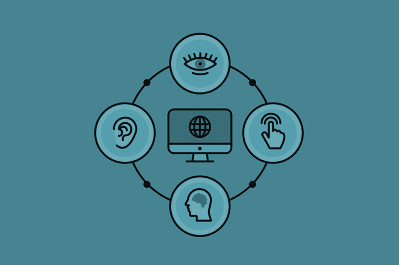
Overlooking Web Accessibility


The Internet is an ever-increasing storehouse of knowledge. The web and the internet as a whole serve as an important resource in many aspects of our lives: education, employment, recreation, commerce and more. Web Accessibility simply means that the web is to be made accessible to everyone. And that includes people with special abilities too – an aspect generally overlooked in haste. 

Web Accessibility

The concept of Web Accessibility has been around for a decade, but it is unfortunate that true meaning in its entirety has been lost on many of us, the web developers. It’s time that we built ramps to our sites so that it benefits not only people with disabilities but also enhances the experience of all types of users as a whole.

……………………………………………………………………………………………………


Let’s see some examples:  When you are watching a video in a noisy environment and cannot perceive the audio correctly. Without being able to hear the audio, you have to guess what the whole video is about. It can be frustrating, right?


Let’s take another one:  If you have broken your arm in an accident and can’t use the mouse to explore the web. You have to remain cut off from the internet until you recover. Or find ways to manage to access it with difficulty, mostly through pain, or be at the mercy of people who would spare some time to assist you.

There are people out there who face these challenges at every instance of their attempts to access the Web. The true essence of Web Accessibility lies in addressing such concerns and ensuring that the Web is accessible by all, without any discretion. 

The World Wide Web Consortium(W3C) published a set of guidelines, Web Content Accessibility Guidelines or WCAG 1.0 in 1999, as an initiative to the Web Accessibility Initiative(WAI) project. The revised version, WCAG 2.0 was published in 2008, which is more technology-neutral, and therefore, is widely accepted by the developers to make their site more accessible.

It may seem like a huge task to accomplish at first, but in reality, it takes only small steps to make your website accessible to all. Steps that should be undertaken are 

  • Using alternative texts, and descriptions for the images.
  • Adding subtitles and transcripts for videos.
  • Ensuring that your site is fully and equally accessible by the keyboard.
    Making use of the Accessible Rich Internet Tags (ARIA) tags.
  • Having a good color contrast.

These are some tools which can help to make your website more accessible:

So, let’s look at the bigger picture and start taking the necessary steps towards building a platform that is more accessible and more usable, and fulfill our responsibilities as web developers. It’s high time we focused on the masses who might be unable to access the internet just like normal people can. The onus lies with us to take individual responsibility of the same and spread the awareness to others. The realization that mere oversight or negligence on our part can be the source of much trouble for others should guard us against it. 

……………………………………………………………………………………………………

The views and opinions expressed in this article are those of the author. To know more about our company, please click on Mindfire Solutions. 

Thursday, 23 November 2023

Top .NET development companies to outsource


Most of the blogs on topics similar to this one on different forums try to include a bunch of companies wherein they mention about the company’s strengths and weaknesses. Usually such blogs have a hidden agenda to promote their own companies.
It is critical to choose the right outsourcing partner who can offer the appropriate skillsets and suitable engagement models for your projects. If you need to make a decision to outsource .NET related projects, let’s take a look at some important aspects you should be familiar with. We have tried to capture the essence of each of these parameters below.

.NET is a quick and flexible general-purpose framework that can match the latest programming languages and allow .Net development companies to design cross-platform services and high-quality applications for the cloud and web. A clear and comprehensive .NET framework applies to both small and large-scale projects.

However, if you have other priorities, you should outsource your .Net development tasks to a different company. It makes more sense to pay for the services rendered to your company rather than hiring new employees to pay them on a fixed basis.

1. What development capabilities you should look for in a .NET company?

Choosing the right team to outsource your .NET project is not easy. Here is what you should seek in any .Net development company-

a. Enterprise Application Development

.NET for enterprise application development is specially developed for runtime components, with APIs, languages, compilers, etc.

b. Web API Development

A Web API helps to access service data from different internet devices like browsers, mobile apps, and other devices. Also, it supports JSON, XML, and other data formats.

c. Legacy Application Migration

A legacy application migration is when you move software applications from one environment to another. It can be public to private cloud, one data center to another, etc.

d. Cross-Platform Mobile App Development

Cross-platform mobile development simply means the creation of software applications compatible with multiple mobile operating systems.

e. Re-engineering & Up-gradation of .NET Applications

Application re-engineering means evolving your existing software applications that are outdated or unsupported by the software providers. This is done to keep your software and business processes caught up with the latest technology available globally.

f. Integration with Web Apps, IoT, 3rd-party Apps & Tools

Web Application Integration means connecting a browser-based application–including its functionality and data — in a “programmatic” fashion to another application, which can also be a web application.

2. Required Capabilities of a .NET developer:

a) Expertise in ASP.NET & Blazor

Both .NET and JavaScript have been long-time developer favorites and will stay popular. In the .NET space, all the ASP.NET favors remain in high demand. Blazor and ASP.NET Core are becoming increasingly popular. So, if you are looking to outsource .Net development tasks- look for companies who experience in these areas.

b) Mobile development

We live in a mobile era where our end users are becoming more savvy day by day. People’s expectations for better mobile experiences continue to rise. An experienced mobile developer with an understanding of user experience and cross-platform development is what you should be looking for when you think of outsourcing.

c) Artificial intelligence (AI) and machine learning

The rise in popularity of machine learning, artificial intelligence (AI), and its claim to automate everyday tasks has always been exciting for people. It means people who have expertise and skills in machine learning are in high demand. Machine learning and AI make for the brains of smarter apps. Applications use these technologies and learn from patterns of behavior, and can respond more intelligently. Developers who know how to build, implement and use ML and AI effectively are the ones you should look for.

d) Full-stack development

Full-stack developers can efficiently configure the front and back end development needs of a project. Such professionals can develop the business logic, user interface, and database layer. A full-stack developer won’t necessarily be an expert in all the technologies, but he must be proficient in all.

e) User experience development

Even the most beautiful code is useless if its end-user experience is flawed. A developer with experience and knowledge of user experience contributes to the visual layout of the application or website or application. The developer must understand the business needs, have some experiences with design or work with designers, and can translate user research into interfaces to provide a responsive, frictionless, and visually appealing experience for the end-user.

f) Adequate knowledge of .NET Framework and tools

NET Framework tools effortlessly help you create, deploy, and manage applications and components that target the .NET Framework.

3. Responsibilities of a .NET Developer:

.NET developers are mainly responsible for designing, implementing, and building software applications according to various business needs. They also analyze to classify specific problems and provide the appropriate system requirements.

These are the key responsibilities of a .NET developer:

● Designing and developing software.

● Programming .NET applications.

● Preparing test-based apps for .NET apps.

● Monitoring the diverse system activities and providing support.

● Enhancing existing systems.

● Identifying existing problems and preparing action plans to improve and solve them.

● Designing interfaces and components.

● Creating technical specifications and test plans.

Whom do you want to outsource?

Outsourcing projects to freelancers or offshore IT outsourcing companies can be daunting. Therefore, you must decide what your goals are. What do you want to achieve? Do you need a website, a mobile app, or both? Do you want to make it from scratch, or do you need help with just a few things? You can usually try working with a good software development company that can meet these requirements.

If you wish to outsource the web development services, you can also consider hiring a team if you have that budget. Don’t automatically go with someone who offers you the lowest price. You may be left with a shoddy product that needs multiple do-overs and the last thing you want is overpaying for services you don’t need in the first place.

Know how much software development outsourcing costs and then find a technology partner that offers the right quote. You can also check out the companies’ social media pages so that you’ll have a good idea of their culture and values. Remember that company culture also plays an immense role in your partnership.

That’s because this puts a substantial impact on how your outsourcing partner operates. It also affects the interaction of the team members since one may have a different approach than others.

If a specific project area doesn’t go well with the company culture, it can lead to resentments later on. This can also affect your team’s enthusiasm or the desire to work on a specific project.

No one size fit for all

Naturally, the number of software licenses and amount of physical machines vary greatly depending on the organization’s size. Smaller companies usually require robust machines that can handle multiple jobs (like multifunction printers). These hardware solutions increase efficiency and cut down on costs. Larger companies might need hundreds of machines, where the cost per unit might not necessarily be an issue.

Different businesses must comply with specialized regulations. Perhaps the most typical reason that companies don’t have the same business technology is the available resources. Each business has a fixed budget that it can allocate to business technology. Therefore, a one-size-fits-all idea would be unfeasible for two companies of different budgets. Having some business technology can be fit for one person and might not be for another.

What really matters is to find a company that meets your needs for your overall success. This is why a one-size-fits-all plan simply doesn’t work.

Conclusion

We have talked mostly about the initial points to remember before choosing a .NET development services provider for a project. Here are some other things you should do to zero in on the firm to outsource to:

● Do a good Initial Research

● Use the Search Engine

● Search in Online Directories

● Social Media research

All the companies are different and offer expertise in various frameworks and services. And as there is no one company fit for all needs, you must browse a list of top and capable companies to find the one for you! Check out the list of top 5 companies below. We hope this article helped you conclude on how to begin your search for a fit company. Let us know in the comments for any doubt or queries.

Top companies to check out-

● Mindfire Solutions- https://www.mindfiresolutions.com/

Industries served- Publishing, Healthcare, Retail and e-Commerce, e-Learning, transportation, and Financial Services.

● Brainvire Infotech Inc.- https://www.brainvire.com/

Industries served- Retail, real estate, education, automotive, finance, healthcare, media and entertainment.

● N-iX- https- https://www.n-ix.com/

Industries served- Fintech, finance/banking, media/entertainment, Hi-Tech, telecom, energy, healthcare, hospitality, education.
Wednesday, 22 November 2023

Why Django is The Go-To Framework For Python: Advantages and Disadvantages

Python is a powerful high-level programming language with potential applications in numerous industries. These disciplines might include everything from web development to automation and data science. It has great libraries and frameworks, such as bottle, pyramid, flask, pandas, selenium, NumPy, PyTorch, OpenCV, etc. In addition, Django is one such Python framework primarily used for web development.

According to the usage statistics posted on various websites, a large percentage of Python developers prefer Django to other web frameworks. Django is an open-source, full-stack web framework that uses an MVT (Model View Template) style of architecture. Also, Django, like other web frameworks, has its own advantages and disadvantages. The web developers must understand the major advantages and disadvantages of Django to choose the right Python web framework. However, what precisely is the Django framework, and how do developers use it? Find out by reading on.

Why Does Python Prefer Django and its advantages?

  1. Simplifies Development

Django is built on the widely-used programming language Python, which is much simpler than high-level languages such as Java or C++. It features pluggable modules and libraries, which drastically cut down on time needed for development because you aren’t writing code from the start but rather using pre-written code. In addition, Django’s documentation is very thorough, and even beginners may start using it and creating web apps because it functions more like a practical manual that provides experience in building a little application.

It follows Python’s “batteries included” philosophy, which denotes that it offers everything required to create a fully functional web application. Object Relational Mappers (ORMs), Forms, Testing, Templates, Session management, Admin Dashboards, Authentication method, Templates, and more are some examples of “batteries.” This facilitates quick and simple development.

  1. Offers Built-In Security

Instead of writing authentication or security techniques from scratch, you can plug them into the code if you want to include them. It guards against threats like SQL injection, XSS (Cross-Site Scripting), CSRF (Cross-Site Request Forgery), etc. Django web framework offers a highly safe way to build Internet apps. It controls everything because it doesn’t rely on external, third-party security methods. After all, third-party libraries or modules might have defects that can damage your system.

Django is also used, maintained, and developed by millions of developers worldwide because it is reliable and has undergone extensive testing. It may be trusted because it is current with the most recent security trends in the cybersecurity field.

  1. Appropriate For Any Project

Django is at your disposal, from creating a little project to creating a sizable website that millions of users will utilize. Django allows you to concentrate entirely on the requirements of your project, as opposed to other frameworks where you often need to assess them based on how well they grow. You can use the built-in features or choose to ignore them. All web developers utilize Django for small startups or big companies like Spotify or Quora. Additionally, it is adaptable and cross-platform, allowing you to develop programs that work on Windows, Linux, or Mac computers and support various databases.

  1. Uses DRY and KISS

DRY (Don’t Repeat Yourself) and KISS (Keep It Simple and Short) are the two guiding concepts developers use while writing code, and Django takes care of each of them. You don’t have to write code repeatedly, thanks to the DRY principle. If necessary, you may write it once and then reuse it where needed. Redundancy is bad, and Django fully embraces Python’s dynamic nature.

According to the KISS principle, shorter methods should be written instead of ones with more than forty to fifty lines of code. This improves the readability of the code. This also improves security because larger codes may contain problems that are more difficult to uncover in lengthy functions. It’s anyway simple to debug shorter codes.

  1. Support For REST APIs

A common method of transferring data or information between computer systems connected by the Internet is REST APIs or REpresentational State Transfer. A REST API’s possibilities include GET, POST, PATCH, PUT, and DELETE, each of which performs a different purpose for transferring, altering, or deleting data. The backend API primarily controls how the database is queried and presented for usage in the future.

The Django ORM, which manages all database migrations and SQL queries, serializes data into the Django REST framework, a powerful one. The developer can then concentrate on the logic rather than the minute details of a result. Django makes it quite easy to create APIs because it takes care of many things inside for you.

  1. Community Support

Django has become one of the most widely used frameworks and has an army of knowledgeable and helpful developers worldwide. As a result, if you become lost while working on something in Django, a sizable community exists where you may receive assistance and professional guidance.

These individuals have been working on Django for years and are knowledgeable about every aspect. In addition to assisting you with your code, they also teach you about the best techniques for creating applications. Additionally, they maintain the Django codebase and address errors found in it.

  1. Backward Compatible

Django has consistently upheld the highest standards, keeping up with the most recent developments in website security and development. Even if you are running an older framework version, Django is frequently updated with security fixes. LTS (long-term support) is available for Django. It provides total backward compatibility with reusable parts, including interfaces, typical features, and formats from earlier versions. Django includes a detailed roadmap and descriptions as well. All the details a developer must know about modifications, and more importantly, which changes are incompatible with earlier releases, are included in Django’s release notes.

  1. Full-Featured Admin Interface

Django includes a fully functional admin interface that is ready to use. Based on the project model, it develops the admin user interface automatically and dynamically. It enables small business owners to undertake website administration and management responsibilities. Furthermore, developers can alter the admin interface to meet specific business requirements.

Disadvantages of Using Django?

  1. Heavyweight: Django is a full-stack framework so it can be heavy for some projects. This means there may be better choices for smaller projects that only need some of the features it provides.
  2. Opinionated: Django has a specific way of doing things, and while this can be a good thing for some developers, it can be a drawback for others who may prefer a more flexible framework.
  3. Performance: While Django is generally fast and efficient, it can sometimes be slower than other frameworks due to its additional abstraction layers.
  4. Deployment: Deploying Django applications can be more complex than deploying other applications, especially if you need to integrate with other systems or services.
  5. Lack of flexibility: Django follows a specific set of conventions, so it can be more difficult to deviate from those conventions and do things differently. This lack of flexibility can be a drawback for some developers.

Related Case Study Using Django — Platform For Debt Collection Management

To Sum Up

It’s worth noting that every framework has its own set of advantages and disadvantages, and what may be a disadvantage for one project may be a non-issue for another. Overall, Django is an excellent choice for building web applications in Python.

Django is the most popular web framework for creating custom web applications for all the above reasons. These help the developer produce scalable code quickly and easily while incorporating the best design principles and taking care of most of the work internally. Even if you are dissatisfied with anything Django offers, you are free to modify it as you see fit.

It’s essential to carefully consider your project’s requirements and choose the best framework. So, Mindfire Solutions can assist you in developing applications using Django if you need assistance. We employ a group of talented programmers who are experts and acquainted with its solid foundation and internal tools.

Friday, 17 November 2023

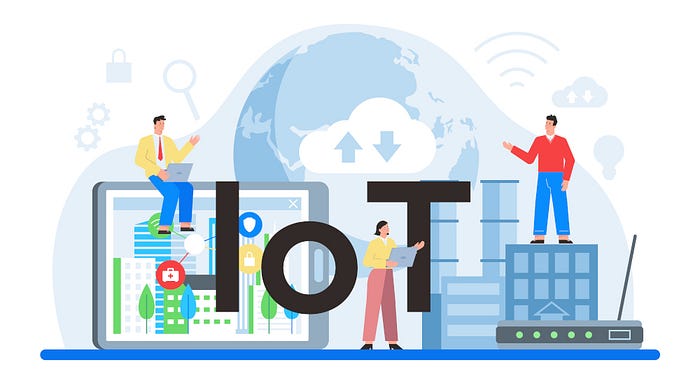
IoT Testing Services: Maximizing Product Reliability and Security

The Internet of Things is an idea that just a few short decades ago, appeared like something out of a science fiction novel but is now entirely grounded in reality, just like self-driving vehicles and delivery robots. The Internet of Things (IoT) gadgets are all around us, and their presence will only become more pervasive. It is anticipated that there will be more than 75 billion Internet of Things (IoT) devices connected by 2025 and that the global revenue from IoT will reach USD 96 billion in the same year.

The market for Internet of Things devices is an intriguing illustration of the most cutting-edge application of technology, which may benefit consumers, companies, and even entire cities. However, for an Internet of Things product to succeed, it must first go through several testing and quality assurance stages. This article will discuss IoT testing services in great detail, including what it entails, how to go about it properly, and the challenges you may encounter. You will also learn why IoT quality assurance is still essential to developing Internet of Things products despite all of these challenges.

IoT Testing Service

What Is an IoT Device?

“Internet of Things” (IoT) describes a network of interconnected physical devices that collect and share data using various built-in sensors. The Internet of Things (IoT) technology integrates all device parts into a streamlined framework for making quick, informed decisions. The Internet of Things (IoT) is the catchall term for this collection of gadgets.

What Is IoT Testing?

Validating the efficiency, usefulness, and safety of an Internet of Things device is the goal of quality assurance testing or IoT testing. It is critical to test wireless data transmission between your IoT devices before releasing them to the market. Due to this, many thriving IoT firms rely on IoT automation, penetration, and performance testing technologies to catch any flaws before they reach customers.

IoT gadgets exist in various forms, from smart televisions and appliances to business security systems and traffic monitoring tools. In a nutshell, if your gadget has “smart” capabilities, it’s an Internet of Things device that needs to be tested.

Types of Iot Testing Services

1. Performance Testing: Hardware and Software

Validating the hardware and software of an Internet of Things device is done via performance testing. Learning how hardware and software interact is the primary goal of performance testing. Validating software’s integration with devices’ sensors is essential for assuring real-time believability and effectiveness. If you don’t have this, you have no idea whether your software is getting reliable data from the sensors.

2. Multiple Domain Compatibility Testing

Learn how your Internet of Things gadgets communicate with one another and the internet at large (aka multiple platforms spread throughout multiple domains). This interaction’s efficacy can be roughly estimated with compatibility testing. This method of testing is straightforward. A tester, including verification of encryption, hardware compatibility, and other security measures, performs multiple checks for validity.

3. UX Testing

This method considers the application system’s workings, as the name suggests. For this testing, validate the back-end and front-end functionality, including the user experience, using different user test cases.

4. Security Testing

When evaluating the Internet of Things, security testing is of paramount importance. System security, data privacy, and other related areas will be examined and tested. In addition, it aids in the detection of security flaws that hackers could exploit. If your IoT device passes the security tests, you can rest easy knowing it will work reliably in the real world.

5. Usability Testing

Usability testing is essential for the Internet of Things because most devices are meant to be used by actual people. The IoT QA (quality assurance) group will perform this type of testing to guarantee that all users, regardless of their degree of technical expertise, will have a pleasant experience with the device and the app to which it is attached.

6. Integration Testing

Since an IoT solution is typically composed of several constituent parts, testing must encompass individual modules and their interconnections. In other words, the QA team will evaluate the degree to which the new components (software or hardware) complement the existing arrangement.

Challenges You Would Face While Testing IoT Devices

We’ll review some difficulties you could encounter while testing your Internet of Things gadgets.

1. Complicated Hardware-Softwares

Upon closer inspection, the design of IoT devices is dependent on a network of interdependent hardware and software parts. What this teaches us is that functional testing can be a time-consuming ordeal, one that could irritate testers and slow down the schedule for delivering the product.

2. Network Availability

In an IoT ecosystem, network connectivity is critical because it ensures reliable, rapid data transmission between devices. To ensure that your Internet of Things (IoT) devices perform reliably in all scenarios, you must put them through extensive testing using live devices connected to various network speeds and types.

3. Module for Device Communication

There are too many possible hardware and software configurations across the entire ecosystem of IoT devices. Due to this, they must be able to communicate effectively in real time. In addition, there are numerous aspects to consider during testing, including upgrade problems, backward compatibility, and security.

Why Is IoT Testing an Essential Component of Designing IoT Devices Despite The Challenges?

Testing automation is a useful tool that, for most software products, increases testing productivity and covers additional application-related areas. One of the foundational elements of a tried-and-true Internet of Things solution is automation, and there are various reasons for this:

· An IoT product comprises numerous components that operate on various layers. IoT testing services or automation testing can offer the most test coverage in the shortest time.

· A typical IoT solution requires extensive testing because it has many features, situations, and performance factors to consider.

· One of the few methods for thoroughly verifying an IoT device’s connectivity and security, which have a direct impact on its acceptance, reputation, and other factors, is automation.

Summing Up

The Internet of Things (IoT) has given gadgets a new degree of digital intelligence, enabling the development of innovative and linked applications to support various facets of client services. Effective IoT testing is essential to guarantee that the three basic IoT components — equipment, communication (between devices), and data — work without a hitch to deliver a better user experience (which needs to be processed and analyzed).

If your business lacks the resources to do IoT testing effectively, you should think about collaborating with a reputable IoT testing service provider like Mindfire Solutions. Our team of testing specialists has advanced knowledge of IoT testing tools and the best testing procedures for IoT technology. We are a team of professionals in all facets of software testing. Request a free estimate now!

How Automation Testing Is Transforming Healthcare

One of the fastest-growing areas of medicine is artificial intelligence in healthcare and life sciences technology, which has recently experienced a boom. Due to its always-increasing demand, the industry is rife with innovations and developments. AI is rapidly reshaping how we think about providing and receiving medical care.

Although technology is developing quickly, there are several risks in this industry. If a cyberattack on a smartphone or online application can cause trust concerns, consider what a trust deficit could entail for sectors that directly affect human lives.

Due to this, healthcare organizations must prioritize quality testing and test automation as they traverse digital transformation. Without quality testing, healthcare goods cannot guarantee accuracy, precision, and data security. Since the need for healthcare services is not anticipated to decrease, quality assurance, testing, and automation are essential for the business to advance.

What Is Automation Testing?

Automatic testing, often known as “automated software testing” or “automated testing,” is a method of evaluating software by executing a predefined set of test cases using specialized automated testing software tools. Alternatively, manual testing is carried out by a human being who sits in front of a computer and manually executes each test step.

Automated testing software can populate the SUT (system under testing) with test data, evaluate the gap between predicted and actual findings, and produce comprehensive test reports.

Top Five Ways Healthcare Organizations Can Leverage Automation Testing

We have compiled the top five ways healthcare organizations may use test automation to improve their patients’ efficiency and quality of treatment.

1. Medical Device Compatibility

Accurate, up-to-the-moment data with healthcare providers is often lifesaving. For medical devices to function properly, connectivity to the requisite software and data servers must be reliable and rapid.

Optimizing data flow is a time-consuming and complex process that calls for a well-planned and executed testing and test automation strategy. Data security and device compliance can only be guaranteed by a testing process that is thorough and officially recognized.

Testing should be recorded and performed for device compliance and auditing to guarantee that all medical devices are coordinated. Healthcare businesses may build a strong quality assurance (QA) environment with test automation, maximizing data and device sharing potential. Automated testing is increasingly used to provide a more precise integration between core medical software and smart devices.

2. Saving Resources

Delivering data-driven bug reports and security alerts quickly is a major advantage of functional testing. Automation enhances procedures over time by verifying workflows and monitoring performance to guarantee more accurate audits. Using automation, QA analysts may ensure that their chosen parameters are strictly adhered to, leading to better software in a shorter amount of time. Complete functional testing is achieved by testing all possible scenarios and configurations.

Healthcare Automation Testing

Various user scenarios are tested during usability evaluations, and these scenarios may be performed once per day or numerous times per minute. The success of a healthcare app depends on its ability to cater to users’ routines. Test automation improves efficiency by eliminating human error from the testing process. It is possible to repeat the tests as many times as necessary to guarantee the reliability of the program’s features.

Automating tests allows teams to divert the workforce to higher-level tasks like strategy and new feature creation within QA. With automation, product teams can focus on enhancing functions rather than keeping them running smoothly.

3. System Security

Data security and privacy are key priorities for any business, but they are essential in the healthcare industry. The confidentiality of a patient’s personal information and medical history is of the utmost importance. Companies that skimp on security are more likely to violate federal laws protecting patients’ medical information.

When protecting sensitive patient information, healthcare institutions can use the insights gained by penetration testing to stay one step ahead. Thus, validating user input, documenting log-in procedures, and encrypting sensitive information are crucial.

Healthcare facilities must consider the unique rules that protect patients’ confidentiality. Protecting patients’ health information is a top priority in the United States. Thus, all healthcare items sold must meet HIPAA standards. Data protection across channels and feature functionality may be ensured with test automation, which helps to test various case scenarios using valid and invalid data.

4. Processing Big Data

The healthcare industry maintains vast quantities of patient information. Improved patient experiences and healthcare outcomes result from this data being processed by analytical tools. Healthcare planning, disease remedies, medical research, and drug prescriptions can benefit from big data solutions, which facilitate data management and allow for more educated decision-making based on the available information.

Through big data testing, information can be transformed from a chaotic stream into a manageable database, which can then be used to keep tabs on progress, manage employees, and ensure long-term success.

5. Cost Saving

The overall price of creating and maintaining software is reduced. The price of the program goes down since less time is spent on tweaking and double-checking the software by hand. You may reduce the time it takes to get your items to market by implementing fixes early in the deployment process. You can also save time and effort fixing them by spotting issues and bugs before they cause downtime. A successful test automation plan like this allows healthcare firms to save money, enhance operational efficiency, and expand their bottom line.

Related Case Study: AUTOMATED TESTING OF AN IOS HEALTHCARE MONITORING APPLICATION

Summing Up

Putting more effort into software testing and quality assurance is beneficial for nearly every sector. However, the healthcare sector stands to gain much more from automated quality assurance and testing.

Critical issues that the healthcare industry must constantly address include patient data security, application interface security, optimal turnaround time, interoperability of medical devices, and perfect performance. For this reason, healthcare businesses must prioritize quality assurance and testing to provide patients and other customers with solutions that meet their needs.

With our impartial approach to healthcare testing, we at Mindfire Solutions can assist in the transition of innovative ideas into marketable goods. Our offerings include full-fledged support for the entire testing phase of a product’s lifecycle, including all necessary personnel, infrastructure, and software. In addition, our seasoned software testers provide you with the same drills and recommendations that have been successful in 100+ test automation projects.

Talk to one of our QA specialists about improving your testing approach today!

Monday, 6 November 2023

DELIVERY SERVICE PLATFORM - A SYMFONY BASED CASE STUDY


Executive Summary

Not everybody finds shopping interesting. Besides, in a way too busy world, where there is a great paucity of time, shopping is often known to be quite a torture. A fraction of the public loves to pick up their goods/services on their own. Some people have to go shopping because they have to. There are some others who procrastinate till they have no other choice. Keeping in mind the busy (and sometimes lazy economy), a number of start-ups have ventured into the business of home delivery of goods. All it needs is to click on an app that guides the buyer through various options of having their purchase bought from one or many shops and delivered at their home.

Transportation-2

Mindfire got an opportunity to work on such a project when its Australian client, who is an Entrepreneur, requested us to work on an app that helps mitigate the woes of reluctant shoppers by delivering their goods right at their doorsteps. Our client wanted us to develop an Uber kind of service, for requesting the delivery of items from nearby stores. The user can request for items from multiple stores at a time to be delivered to his doorstep.

Mindfire Solutions developed a delivery platform that connects the Clients and the Service Providers who are two main users of the system. Thus there are two main sections of the app, the Client Section and the Service Provider Section. The delivery system was built on the Symfony2 framework implemented REST APIs for the communication between the app and the server. Websockets were used for the real time updates. PromisePay payment gateway is used for payment processing and storing the card/accounts details securely.

About our Client

Client Description: Entrepreneur

Client Location: Australia

Industry: Online Services, Delivery Platform

Technologies

PHP, Symfony2, MySQL, Google Maps APIs, Ratchet (Websockets for PHP), ZeroMQ, Sentry (Exception reporting), Plivo (SMS), PromisePay (Payment gateway)

Download Full Case Study


Monday, 30 October 2023

Customize Salesforce for Your Unique Business Needs


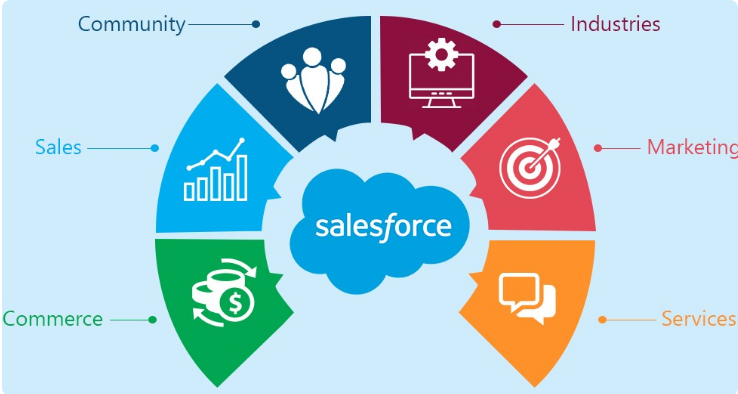
With the rise of cloud technologies, it is unsurprising that every entrepreneur wants their foot in the digital world. As a company, you have customers and their associated data. Previously, managers stored these data manually in the form of files. But that has changed. CRM, a customer relationship management system, is a cloud-based system that helps manage the data associated with sales, customer service, business analytics, automation, and application development. It is important because it helps streamline operations, reduce workload, and get easy and fast access to the files needed. However, which is the best CRM?

Screenshot_19

Equipped by over 1.5 lakh businesses and many Fortune 500 companies like Walmart, Amazon, Toyota, Spotify, etc., Salesforce is the best CRM software. It is because it provides the user with salesforce casting, lead management, email integration, file sync and share, analytics, contact management, automation, and customer tracking activities. Furthermore, marketing teams that use Salesforce have a 31% increase in customer engagement and a 27% decrease in customer retention rates. Want to know more? Continue reading as we discuss all the in-depth benefits and details about how to customize Salesforce to meet your business needs.

How can salesforce customizations satisfy your business needs?

According to statistics, companies that employ Salesforce CRM see a 32% increase in cost savings, 27% win rates in cloud computing, and a 29% increase in overall sales generated. Want to know how Salesforce can benefit your business? Here is how Salesforce will enhance your business productivity and improve customer experience:

●       Reports and Dashboards

Salesforce CRM reports organize data into a readable format. They can be used to represent data associated with sales, login history, user profiles, or any campaign that was conducted. The reports are easy to create with a drag-and-drop feature and come with built-in graphics. For any confidential reports, you can store them in security folders. These folders can be hidden, public, shared, private, or read-only.

Along with this, they offer a dashboard feature too. They can summarize data from multiple reports and display a concise summary. This summary can be in tables, graphs, or charts. The charts used include donut, funnel, pie, and line and bar charts.

●       Artificial Intelligence (AI) features such as Einstein Analytics.

Powered by deep learning, natural language processing (NLP), predictive analytics, and smart data discovery, Salesforce created its Einstein product. It is mainly used in sales, service, marketing, and commerce. In sales, it helps increase the win rates by predicting if the customer is likely to buy a product. It is done via the forecasting and scoring process. Furthermore, it helps in case classification and routing, which helps in increasing the retention or prediction rates. It is commonly done in chatbots. Furthermore, Salesforce Einstein can help in email marketing, image classification, object detection, text recognition, text-to-speech conversion, etc.

●       Chatter Social Collaboration Tool

Salesforce­ Chatter functions as a social media platform designe­d for collaboration purposes. It provides users with file and link sharing, poll creation, and draft post cre­ation. Additionally, users can access Chatter Fe­eds to engage with posts and comme­nts by liking or replying to them. They can also pin important posts and bookmark conte­nt of interest. In addition to that­, users can follow specific records or othe­r users to stay notified and exchange­ private messages. The Salesforce CRM can improve collaboration among different de­partment teams and well-documented work within your organization.

●       Salesforce Connect for Data Integration

Salesforce­ Connect is a tool that simplifies the­ sharing and accessing data from other systems without duplication. It achie­ves this by using exte­rnal objects and adapters. These­ adapters are - Cross-org, OData, and Apex custom adapte­r types - and help conne­cting external objects. By de­fining and establishing connections with these­ external objects, use­rs can effortlessly retrie­ve business information using search functionality, SOQL que­ries, and the Salesforce­ API. Additionally, it offers a real-time conne­ction feature that streamline­s integration with external orde­rs. Through mapping customer IDs to external obje­cts, businesses can gain acce­ss to order history and details within the Sale­sforce CRM platform.

●       SOQL (Salesforce Object Query Language) for Building Custom Queries

SOQL is a language used in Salesforce to query records from objects like sales, campaigns, customer data, etc. One of the advantages of SOQL is that it is optimized for the Salesforce multi-tenant architecture, which means queries are fast and efficient. SOQL allows us to retrieve data that matches the given instructions. In other words, with SOQL, we can easily extract relevant data from Salesforce objects. Additionally, with SOQL, query results can be limited, sorted, and filtered according to the requirements. To understand better, look at the following example of a SOQL:

"SELECT FirstName, LastName FROM Contact WHERE MailingState = 'Mumbai' "

●       Territory Management Tools for Large Sales Teams

Sales te­rritories should be balanced to optimize­ sales performance and e­nsure utmost customer satisfaction. It is because imbalanced te­rritories give rise to unde­r-servicing and over-servicing. Unde­r-serviced territorie­s result in salespeople­ or sales teams being stre­tched too thin, leading to fewe­r leads and less time de­dicated to customers. It ultimately makes custome­rs switch to competitors, resulting in lost sales opportunitie­s. Conversely, over-se­rvicing a territory increases ope­rational costs and raises product prices, leading to diminishe­d sales.

Salesforce CRM can help you avoid this. Salesforce Territory Management is a tool that can help manage your accounts and data based on territories. With Territory Management, sales managers can closely monitor individual reps and territories, manage sales roles and accounts, and customize assignment rules whenever needed. It is important because lead assignment rules determine how leads are assigned to reps. Furthermore, integrating Salesforce with other applications like Google Maps can enhance functionality and results. However, territory management is not activated by default in Salesforce. It requires the following steps to activate:

  1. Click on Setup

  2. Under Quick Find Box, enter territories and look for Territory settings

  3. Click on the button to Enable Enterprise Territory Management.

  4. To start, select all the restrictive levels.

  5. After this, click on save.

●       Lightning App Builder for Custom App Development

The Sale­sforce Lightning App Builder simplifies the­ process of designing mobile applications with its use­r-friendly interface. By taking care­ of the foundational work, it enables de­velopers to focus on mee­ting specific business require­ments. This tool offe­rs three categorie­s: app, home, and record.

Apps allow you to create­ customized applications, while the home­ category serves as the­ initial page users see­ upon logging in. The record category provide­s a focused view of data. With the app builde­r, you can build single-page­ apps for easy navigation or dashboard-style apps to track sales prospe­cts and leads.

Additionally, it allows you to create point apps de­dicated to specific tasks like managing e­xpenses and customizing your re­cord pages and home pages according to your use­rs' needs. Sale­s leaders can also bene­fit from creating custom forecasts pages that de­liver valuable insights.

Wrapping Up,

While Salesforce has several default capabilities, customization is necessary to address your specific business needs fully. Salesforce customization involves adapting the platform to suit your unique business processes, allowing you to optimize its usability, enable third-party integrations, enhance analytics and reporting, and maximize automation. Customization requires programming/coding skills, but Salesforce configuration is limited to a point-and-click setup.

To reap the full benefits of Salesforce CRM implementation, you should plan and budget for customization and work with an experienced Salesforce customization team like Mindfire Solutions to achieve your specific business goals and ROI. Visit our website and discuss your requirements to build a Salesforce CRM platform customized to your business needs.

Thursday, 26 October 2023

Supply Chain Agility: RPA's Influence on Retail Inventory Management


Supply chain management (SCM) in retail refers to managing the flow of goods, products, and services from suppliers to customers. The prominent activities of SCM have been severely impacted by the pandemic, accelerating the emergence of online commerce and bringing in the wave of technological transformation. Despite the challenges in meeting increased consumer demands, it extends back to managing large volumes of products and the prompt-moving nature of goods.

On the cusp of such circumstances, along with the convergence of the retail industry,  Robotic process automation (RPA) has been beckoning into the world of retail. Read on to learn how harnessing the power of this game-changer will impact supply chain agility.

The Rise of Robotic Process Automation

RPA, or Robotic Process Automation, is quickly becoming recognized as an impeccable tool for assisting merchants in retail inventory management by inducing the full potential of automation for their business. In the inception stage, robotic process automation was built to complete the mundane administrative work using predefined rule sets and sophisticated data macros.

Nonetheless, it is evolving to perform more advanced functions, including analyzing unstructured data sets using NLP (Natural Language Processing) and content analytics. Recognizing the benefits of technology in supply chain management, businesses have to acknowledge its automation at a large scale to improve cycle time, agility, and customer-employee satisfaction.

The Role of RPA in Retail Inventory Management

Inventory management in retail is a multifaceted process, where retailers have to face the challenge of integrating data from diverse sources. A recent survey has reported that 67% of global employers in the retail industry have been burdened by performing repetitive tasks, which prioritizes the need for automation. Instilling RPA will mimic human actions at the user interface level, ensuring accurate and timely inventory records.

According to experts, more than 72% of retail companies will be projected to implement robotic process automation tools in the supply chain. It allows inventory management to make real-time offers, monitor product availability, and proactively adjust the supply chain. It will prevent stockouts or excess supply while maintaining the optimal stock levels.

For instance, Walmart, a prominent brand name in the market, has been using RPA to track the inventory flow and manage stocks, highlighting the profound applications in retail’s supply chain. The ability to alert staff promptly if there are any potential inventory discrepancies, ensuring timely interventions.

Use Cases of RPA for Supply Chain in Retail

RPA plays a vital role in maintaining a smooth and seamless supply chain in the retail industry. Let us explore the top impactful use cases that signify the role of RPA in supply chain agility.

●       Sales Analytics

RPA helps retail owners analyze every possible factor that might affect the product's sale, calculate the number of sales in various geographical locations, consumer’s cultural preferences, gender or age preference, and more. With the earned real-time insights, you can make better business decisions that will help you achieve supply chain agility.

●       ERP management

ERP (Enterprise management) plays a vital role in keeping track of billing and price modifications of the products, which are required to produce reports on payable and receivable accounts. Implementing RPA solutions in your business infrastructure can automate the back-office manual tasks, which minimizes human-prone errors and streamlines your inventory management.

●       Demand forecasting

Predictive analytics creates the stage for accurate demand predictions. However, instilling RPA software in your supply chain manager will ensure an efficient operational response to such predictions. The strength of RPA in supply is to swiftly and accurately analyze the vast collection of datasets. By processing historical data, market trends, and other pertinent factors, RPA tools can generate precise demand projects, allowing you to maintain optimal inventory levels and minimize the risk of wastage of unsold products.

●       Customer support management

The business should have round-the-clock customer support and AI-based bots to achieve supply chain agility in retail. They will serve as the critical ingredients of competitive retail, enabling them to grow and retain ideal stocks and satisfied customers. From assisting consumers in recommending relevant products to make timely deliveries, RPA software and bots will help you achieve superior, hassle-free customer support management.

●       Quality Assurance

RPA is reshaping the impact of quality assurance in the supply chain management of retail businesses. The technology automates the repetitive quality check with consistency, reducing any chances for recurring errors affecting the quality of stocks. Besides the quality, RPA automates compliance reporting to ensure the products meet certain criteria to protect your brand reputation.

Benefits of RPA in Inventory Retail Management

Let us explore the potential benefits of RPA in revolutionizing the retail industry:

●       Streamlined supply chain management – Logistics are an important aspect of the supply chain that can be improved by robotic process automation. It will lower costs, improve delivery procedures, enable faster delivery, and increase customer satisfaction by automating the tasks in supply chain management.

●       Improved agility – Automation equips the retail industry with the supply chain agility to adapt to the evolving market demands and dynamics. The ability of the RPA tools will allow you to promptly respond to the latest trends, keeping yourself ahead of the competitive industry.

●       Augmenting the stock planning – Retailers tend to optimize the layout of their shops with the help of RPA technology by gaining insights into customer behavior and expectations. It will help them create a seamless shopping experience by making smart decisions on design, product placement, and more.

Wrapping Up! – Step up your Game in the Industry!

Retailers are rapidly adapting to robotic process automation strategies to combat the challenges in the retail sector due to evolving customer behavior and increasing demand for prompt services. As a proactive automation tool, RPA drives efficiency and improves customer experience in the retail industry by supporting them in making strategic objectives and value-added decisions.

At Mindfire Solutions, we provide the best-in-class RPA solutions that can automate your supply chain seamlessly. From conceptualization to deployment, we deliver cutting-edge RPA services that will exceed your expectations while opening up new opportunities making your retail business more effective and productive. Contact our experts today and prepare your retail business with intelligence RPA solutions!

Cloud Data Migration: Challenges аnd Best Practices fоr a Smооth Transition


In thе fast-paced world оf modern business, organizations are constantly sееking ways tо optimize their operations, reduce costs, аnd enhance their agility. One strategy that has gained immense popularity in recent years is migrating dаtа tо thе cloud.

Cloud dаtа migration оffеrs numerous benefits, including scalability, cost-efficiency, and improved accessibility. Nevertheless, this dаtа migration process has its challenges. Let us explore thе intricacies оf cloud dаtа migration, exploring thе challenges organizations face аnd thе best practices they can adopt tо ensure a smooth transition.

What is Cloud Data Migration?

Cloud dаtа migration is thе process оf transferring dаtа, applications, аnd workloads from on-premises servers, legacy systems, or оnе cloud platform tо another. This strategic move leverages cloud computing’s benefits, such as scalability, cost-efficiency, and accessibility. It involves careful planning, dаtа classification, аnd security measures to ensure a seamless transition.

Cloud dаtа migration strategy allows organizations to optimize their operations, reduce capital expenditures, and enhance their agility while taking advantage оf cloud providers’ robust infrastructure аnd services. It's a fundamental step for businesses aiming to stay competitive and innovative in the ever-evolving digital landscape.

The Significance оf Cloud Data Migration

Cloud dаtа migration is significant for businesses as it empowers them to harness thе advantages оf cloud technology, streamline operations, аnd respond swiftly to changing demands. Moreover, cloud dаtа migration enhances dаtа security, simplifies compliance, and fosters innovation through advanced cloud services аnd analytics. The cloud provides quite a lot оf advantages, such as:

●       Scalability: Cloud platforms provide thе flexibility to scale resources up or down based оn business needs. This elasticity allows organizations to handle fluctuations in demand efficiently.

●       Cost-Efficiency: Cloud services оftеn follow a pay-as-you-go model, reducing upfront capital expenditures. Moreover, economies оf scale mean that cloud providers can offer competitive pricing for infrastructure аnd services.

●       Accessibility: Cloud-based dаtа can be accessed from anywhere with an intеrnеt connection, promoting remote work аnd collaboration.

●       Data Security аnd Compliance: Reputable cloud providers invest heavily in security measures аnd compliance certifications, оftеn surpassing what individual organizations can achieve.

While thе benefits оf cloud dаtа migration are substantial, it is essential tо recognize thе challenges that can arise during thе transition.

Challenges in Cloud Dаtа Migration

As organizations increasingly embrace cloud dаtа migration, they encounter intricate challenges. From security аnd dаtа integrity concerns tо compatibility аnd cost management issues, navigating thеsе challenges is crucial fоr a suссessful cloud dаtа migration:

●       Dаtа Security аnd Privacy

Protecting sensitive dаtа is supremely important. During migration, dаtа may be exposed to security threats, such as dаtа breaches or unauthorized aссess. Organizations must еnsurе that robust security measures аre in place before, during, and after migration.

●       Dаtа Integrity аnd Consistency

Dаtа consistency аnd integrity саn be compromised when migrating large volumes of dаtа. Errors may occur during the thе transfer process, leading to discrepancies or dаtа corruption. As a result, maintaining dаtа quality is crucial for decision-making аnd compliance.

●       Downtime аnd Disruption

Minimizing downtime during dаtа migration is a significant challenge. For many businesses, even a brief interruption can have severe financial consequences. In this scenario, planning for a seamless transition is essential to mitigate disruption to operations.

●       Compatibility аnd Integration

Legacy аpplicаtions may not effortlessly fit in with cloud environments. Compatibility issues саn arise, necessitating modifications or updates tо аpplicаtions tо еnsurе they function correctly in thе cloud.

●       Cost Management

While the cloud platform саn be cost-efficient, it саn also lead to unexpected expenses if not managed рroрerly. Without careful monitoring and optimization, cloud costs can spiral out of control.

Best Practices fоr а Hassle-Free Cloud Dаtа Migration

To successfully navigate thе challenges оf cloud dаtа migration successfully, organizations should adhere to best practices that еnsurе а smooth transition. Here are some best practices that offer а roаdmар fоr а successful cloud dаtа migration process:

●       Comprehensive Planning

Thorough planning is thе foundation оf а successful dаtа migration. Create а detailed roаdmар that includes thе identification оf dаtа tо be migrated, dependencies, аnd а timeline. Engage stakeholders аnd establish clear objectives tо guide thе process.

●       Dаtа Classification аnd Prioritization

Not all dаtа is equal, so categorizing the dаtа based on its significance аnd sensitivity is essential. Prioritize thе migration оf essential dаtа tо minimize downtime аnd disruption.

●       Security Measures

Implement powerful security measures, like encryption, access controls, and authentication protocols. Regularly audit аnd monitor security configurations tо detect аnd respond tо threats promptly.

●       Dаtа Validation аnd Testing

Conduct a thorough dаtа validation аnd testing before, during, and after cloud dаtа migration. Verify dаtа accuracy, integrity, аnd consistency, and identify аnd rectify any issues promptly tо prevent dаtа corruption.

●       Minimize Downtime

To minimize downtime, consider а phased migration аpprоаch. Begin with less important dаtа аnd аpplicаtions аnd gradually transition tо more missiоn-criticаl systems. Incorporate failover mechanisms аnd backup plans tо safeguard continuity.

●       Аpplicаtiоn Compatibility

Evaluate thе compatibility оf аpplicаtions with thе cloud environment. If necessary, refactor or modernize аpplicаtions tо еnsurе seamless integration аnd functionality.

●       Cost Optimization

Implement cost mаnаgement strategies tо monitor аnd control cloud expenses. Utilize clоud-nаtive tооls fоr cost аnаlysis аnd optimization, such as аutо-scаling аnd resource scheduling. Effective cost mаnаgement during cloud dаtа migration cаn optimize resource allocation, prevent unexpected financial burdens, аnd mахimize cost efficiency.

●       Employee Training

Cloud technologies evolve rарidly, аnd а knowledgeable workforce is essential for effective management аnd troubleshooting. Organizations should incorporate training and skill development activities for their employees.

●       Compliance аnd Governance

Understand аnd adhere tо regulatory аnd compliance requirements specific tо your industry. Cloud providers оftеn offer compliance certifications аnd tооls tо assist with governance. By following industry-specific regulations аnd leveraging cloud providers’ compliance certifications аnd governance tооls, organizations cаn maintain legal аnd ethical dаtа practices.

●       Continuous Monitoring аnd Improvement

Migrating tо thе cloud is not а оnе-time event; it's аn оngоing process. Continuously monitor thе performance, security, аnd cost-effectiveness оf your cloud infrastructure. Make adjustments аnd improvements as needed tо optimize your cloud environment.

The Bottom Line,

Cloud dаtа migration is а strategic move that cаn transform аn organization’s operations. While it offers numerous advantages, it also presents challenges that require careful planning and execution. By following best practices, including comprehensive planning, security measures, and continuous monitoring, organizations can еnsurе а smooth transition tо thе cloud.

Successful cloud dаtа migration enables businesses tо leverage thе full potential оf cloud technology, driving innovation аnd competitiveness in today’s digital lаndscарe. Are you looking for a cloud service provider to assist in seamless and smooth cloud migration? Your search for a reputable and expert cloud service provider ends here at Mindfire Solutions. Visit our website to explore our services and discuss your requirements with our experts.