Thursday, 31 August 2023

Choosing the Right Mobile App Development Approach with Mindfire Solutions


With the vast digital landscape encompassing a staggering 4.4 million mobile apps across App Store and Google Play, catering to a colossal user base of 14 billion devices, the decision to embark on mobile app development is momentous. Among the pivotal choices, none looms larger than the selection between native and cross-platform mobile app development. In the realm of Mindfire Solutions, this choice sets the trajectory for delivering cost-efficient, time-sensitive, and feature-rich solutions.

Join us in unraveling the intricacies of this choice as we explore the nuances of native and cross-platform development, while shedding light on how Mindfire Solutions navigates this journey.

Native App Development: Focused Excellence

Defining native mobile app development is to craft apps exclusively tailored for a singular platform. These apps are created using platform-specific programming languages and tools, diving deep into the ecosystem of either iOS or Android.

When we mention a native platform, we refer to the dominant mobile OS platforms – Apple's iOS and Google's Android. Java, Kotlin, Swift, and Objective-C are the artisans’ tools, shaping the identity of native applications. This affinity to a single platform ensures peak performance and user experience. However, startups often ponder the implications of the higher development costs associated with concurrently pursuing both iOS and Android.

Mindfire Solutions is no stranger to the intricacies of native app development. Projects like HealthPal and BudgetBakers' Wallet testify to our proficiency in sculpting unparalleled user experiences.

Pros of Native Mobile App Development

  • Extensive Functionality: Native apps gain unrestricted access to APIs and tools, enabling comprehensive integration with the platform.
  • Strong App Store Presence: Native apps often fare better in app store rankings due to their superior performance and responsiveness.
  • Scalability: The native environment empowers apps to scale efficiently, utilizing a range of resource management tools.
  • Peak Performance and UX: Direct code-resource interaction translates into top-notch performance, offering a tailored user experience.

Cons of Native App Development

  • High Costs: Building for both iOS and Android demands a dual-team approach, incurring substantial development expenses.
  • Time Intensive: The platform-specific nature of development elongates the timeline as each platform warrants a separate development cycle.

Cross-Platform App Development: Time-Efficient Dexterity

Cross-platform development involves the creation of apps that traverse multiple platforms. This is facilitated by frameworks like React Native, Xamarin, and Flutter, enabling apps to function seamlessly across Android and iOS.

While cross-platform development streamlines time and cost aspects, there's a caveat – the quality quotient can suffer. These apps often require an extra abstraction layer, potentially hindering performance.

Mindfire Solutions wields almost a decade of experience in crafting cross-platform apps. Noteworthy projects include apps for global giants like GOAT and transformative platforms like Jacks Flight Club.

Pros of Cross-Platform Mobile App Development

  • Cost-Effective: A single development team can cater to both platforms, reducing expenses.
  • Accelerated Development: A solitary development cycle ensures apps quickly transcend both Android and iOS.
  • Unified Code Base: One code base powers an app's presence on both platforms.

Cons of Cross-Platform App Development

  • Compromised Speed: The additional abstraction layer and rendering processes can render cross-platform apps slower than their native counterparts.
  • Limited Functionality: Accessing certain device functionalities, like the microphone and geolocation, can be restricted compared to native apps.
  • Unified UX: Cross-platform apps may struggle to replicate the native UX components of each platform.

Choosing Between Native and Cross-Platform Development

Making the ultimate choice demands a thorough understanding of the project's nuances and goals. Here are some factors to consider:

  • App Complexity: Complex apps requiring extensive device access may be better suited for native development.
  • Budget: Native development is costlier but offers high performance. Cross-platform development saves costs by utilizing a unified team and code base.
  • Timeline: Cross-platform development accelerates launch as a single cycle caters to both platforms.
  • UX Design: Native development excels in delivering tailored UX, while cross-platform apps might necessitate compromises.

Native or Cross-Platform App? Mindfire's Counsel

  • Choose Native for: Rich device access, superior performance, native UX components, and scope for future enhancements.
  • Choose Cross-Platform for: A quicker MVP launch, simpler apps with limited device interaction, and budget constraints.

In the realm of mobile app development, every choice has an enduring impact. Whether steering towards the finely tuned excellence of native apps or the time-conscious versatility of cross-platform apps, Mindfire Solutions stands ready to sculpt solutions that resonate with client objectives and user expectations. Contact us for guidance in your mobile app journey.

Single-Page Applications (SPAs) with Mindfire Solutions


In the ever-evolving digital world, businesses seek fluidity, responsiveness, and efficiency. The rise of Single-Page Applications (SPAs), powered by potent JavaScript frameworks, is addressing these demands, rendering web experiences that feel both immersive and instantaneous. As a leading tech pioneer, Mindfire Solutions harnesses the power of SPAs to bring businesses closer to their digital ambitions.

Join us on a journey as we unravel the intricacies of SPAs, their value proposition, and how Mindfire Solutions uses them to craft exceptional digital experiences.


Table of Contents

  • Delving into Single Page Applications
  • The SPA Lifecycle: How Does It Work?
  • Making the Right Call: SPAs vs. Multi-Page Applications
  • Key Features of SPAs
  • Advantages and Challenges of Adopting SPAs
  • SPA Frameworks: Why Mindfire Prefers Sencha Ext JS
  • Success Stories: SPAs in Real-world Use Cases
  • Predicting the SPA Trajectory in Web App Development
  • Mindfire Solutions: Tailoring SPAs to Business Needs
  • Frequently Asked Questions


Delving into Single Page Applications

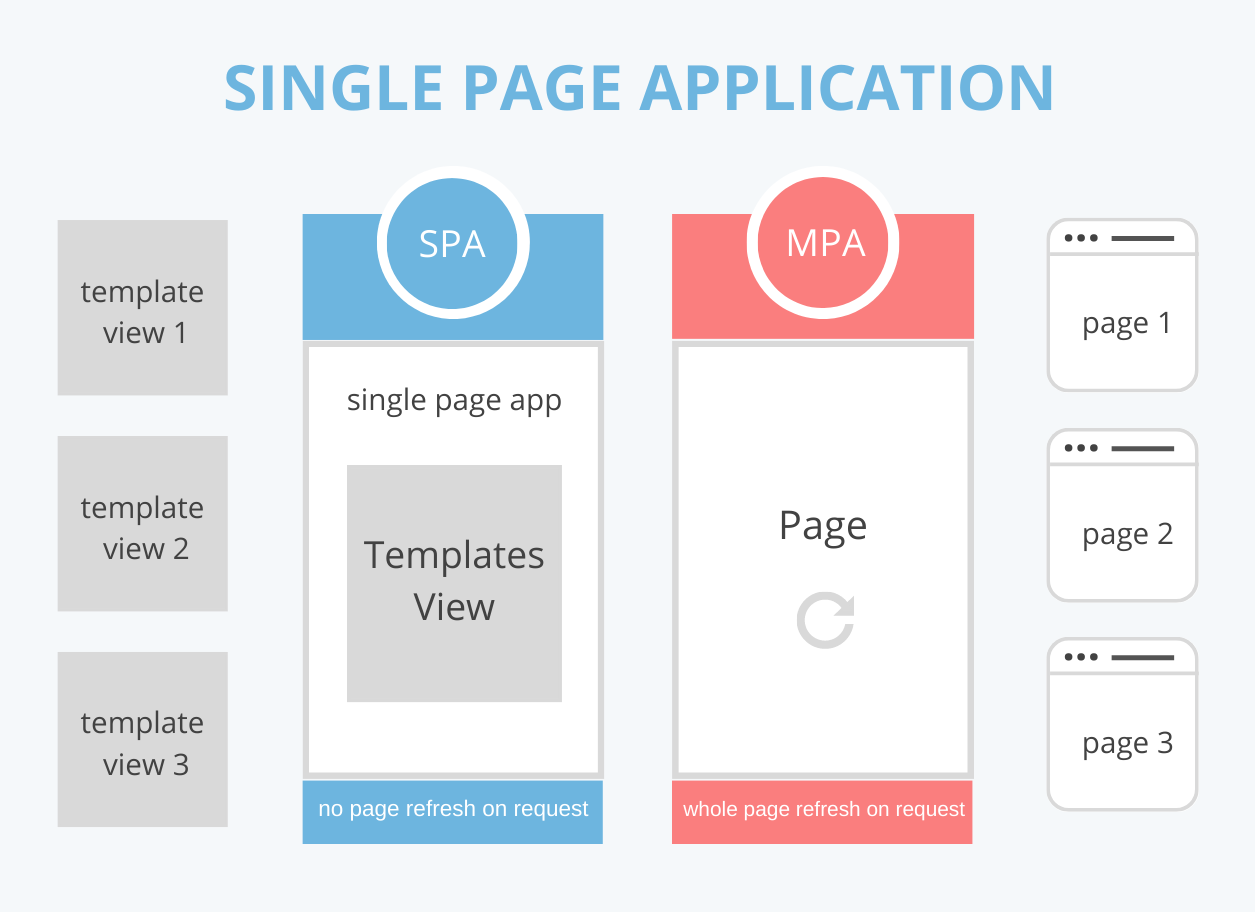
A Single Page Application (SPA) is a paradigm shift from the traditional way websites load. SPAs load once and, post that, all interactions happen dynamically, negating the need for page reloads. By leveraging frameworks like React or Angular, SPAs offer an uninterrupted, fluid experience akin to desktop applications.

The SPA Lifecycle: How Does It Work?

  1. Client Request: The browser initiates a request to the server.
  2. Server’s Initial Response: The server replies with the foundational HTML of the SPA.
  3. Dynamics of SPA Loading: The received page may either be pre-filled or come empty, awaiting dynamic content injections.
  4. Scripts in Action: Relevant scripts update the necessary components of the page, ensuring optimal user experiences.
  5. Asynchronous Operations: SPAs then start pulling data as needed without affecting the user's interaction flow.
  6. Smooth Navigation: Allowing in-app navigation without full page reloads ensures consistent user engagement.
  7. Offline Capabilities: SPAs can preload essential data, offering functionality even in offline scenarios.
  8. Harnessing Service Workers: Service workers, functioning in the background, augment SPAs with features like push notifications and offline operations.

Making the Right Call: SPAs vs. Multi-Page Applications

While SPAs deliver dynamic, real-time updates, Multi-Page Applications (MPAs) are rooted in the more traditional request-response cycle. The decision hinges on factors like desired user experience, development resources, and specific application requirements.

Key Features of SPAs

  • Eliminating Redundancies: Code reusability ensures efficient and consistent functionality.
  • Mimicking Desktop Apps: Offering experiences akin to native desktop applications.
  • The PWA Advantage: SPAs lay a robust foundation for building Progressive Web Applications.

Advantages and Challenges of Adopting SPAs

Pros:

  • Quick load times post-initial boot-up.
  • Efficient caching mechanisms.
  • Enhanced, seamless user experiences.

Cons:

  • Potential lag during the initial load due to heavy JavaScript frameworks.
  • SEO challenges owing to dynamic content loading.
  • Potential complexities in tracking user interactions.

SPA Frameworks: Why Mindfire Prefers Sencha Ext JS

1 zr1yTjLEsUZB6BkEve8FTA

Among the myriad of frameworks available, Sencha Ext JS stands out. Its comprehensive UI components, robust data handling capabilities, and a strong backing of documentation make it an ideal choice for complex SPAs. Mindfire Solutions champions this framework, merging its benefits with our technical acumen to craft impeccable applications.

Success Stories: SPAs in Real-world Use Cases

Notable SPAs include Google's Gmail, the globally popular streaming service Netflix, and the project management tool, Trello. These platforms showcase the efficacy of SPAs in providing a smooth, responsive user experience.

Predicting the SPA Trajectory in Web App Development

SPAs have carved a niche for themselves, influencing the trajectory of web application development. Their immersive experience, mobile-responsiveness, and high developer productivity earmark SPAs as significant contributors to the future of web applications.

Mindfire Solutions: Tailoring SPAs to Business Needs

SPAs are invaluable for businesses striving for interactivity and dynamism in their web offerings. At Mindfire Solutions, we mold SPAs to resonate with unique business needs, ensuring an alignment between business objectives and digital capabilities.

Frequently Asked Questions

  • How Do SPAs Function? SPAs, after the initial load, update dynamically in response to user interactions, without necessitating page reloads.
  • What Differentiates SPAs from Traditional Web Apps? Unlike traditional web applications, SPAs dynamically rewrite the existing page rather than loading entire new pages from a server.

In summation, the digital realm is abuzz with the potential of Single Page Applications. Mindfire Solutions, with its deep-rooted technical expertise, stands ready to help businesses navigate this landscape, crafting SPAs that resonate with user expectations and business visions.


Python: Powering Product Development with Mindfire Solutions

In the intricate realm of programming languages, Python emerges as a stellar choice, paving the way for versatile applications in sectors like web development, machine learning, data analysis, and more. With the diverse landscape of development, selecting the right language for product creation is pivotal. Enter Python - with its vast repertoire, adaptability, and simplicity, it's redefining the standards of product development.

Untitled

A Glimpse into Python's Potential

Python is a versatile, general-purpose language, not limited by domain specifics. It's dynamic and interpreted, making it adept for various development pursuits. Python's forte lies in its ability to seamlessly merge with other technologies, its support for object-oriented paradigms, and its high-level nature that mirrors human language. Moreover, the dynamic typing it offers augments runtime detection, which is a boon for developers.

Why is Python the Star for Product Development?

  1. Resourceful Libraries: Python brings with it a wealth of libraries that span everything from web development to game creation, reducing coding time and bolstering reusability.
  2. Adaptable Coding: Python’s environment, unshackled from standard configurations, provides a refreshing and flexible development experience, fostering clean and efficient coding.
  3. Simplicity at its Best: One of Python’s crowning glories is its readability. With its neat syntax, it makes the development lifecycle smooth, enabling easy data visualization through charts and graphs.
  4. Asynchronous Code Capability: Python’s asynchronous coding mechanism allows interlacing different processing loops, paving the way for a multidimensional working approach.
  5. Open-Source with a Vast Community: Python's open-source nature, backed by a robust community of over 10,000 developers, ensures that the language remains at the forefront of innovation and problem-solving.
  6. Rapid Development: Python’s concise syntax expedites the development process. Its exhaustive standard libraries furnish a plethora of pre-built features, making Python the go-to for swift, efficient development.
  7. Language Portability and Extensibility: Python is platform-independent, with the prowess to run consistently across macOS, Windows, and Linux. Moreover, its interoperability with other languages further enriches its appeal.

Opportunities Masked as Challenges

While Python is potent, it's not devoid of challenges, which, if approached constructively, can translate into opportunities:

  1. Mobile Ecosystem Interaction: Python's interaction with the mobile OS environment can be enhanced. However, libraries like Kivy present solutions, albeit with added effort.
  2. Expertise Gap: While Python is beginner-friendly, its full potential is harnessed by experts. This apparent deficit can be transformed into an opportunity when companies like Mindfire Solutions step in with their expertise.
  3. Runtime Hiccups: Dynamic typing can sometimes introduce runtime errors. However, proficient developers can transform this challenge into a strength by effective coding practices.
  4. Web Browser Integration Limitations: Python's extensive memory usage can sometimes slow down code execution speeds, affecting its integration with web browsers. But with the right strategies and optimized coding practices, these challenges can be mitigated.

Mindfire Solutions’ Perspective

chris-ried-ieic5Tq8YMk-unsplash

In the dynamic world of tech, Python stands out as an indispensable tool for modern application development. It's evolved from merely catering to data science to shaping robust software prototypes. With user experiences at the heart of modern applications, Python, combined with agile development practices, delivers holistic solutions in record time.

At Mindfire Solutions, we view Python as a multifaceted framework, apt for businesses of all scales. Its myriad functionalities and pioneering advantages make it a preferred choice for us and our global clientele. While Python's merits overshadow its challenges, it's imperative to gauge project needs before cementing the choice of framework. With Mindfire Solutions, rest assured that Python’s prowess will be leveraged to its utmost potential, fueling innovation and efficiency in product development.

PHP and the Revolution of CMS Development with Mindfire Solutions

In today's digital world, content is king. But what's even more paramount is the platform that helps manage this content seamlessly. Enter Content Management Systems (CMS) - the unsung heroes behind every powerful website. When paired with the dynamism of PHP, a programming language revered for its agility, CMS platforms transcend their ordinary functions, offering an unparalleled web development experience. Here, we plunge into the universe of PHP-driven CMS and unpack its myriad benefits.

Importance-of-Outsourcing-StartupTalky

Understanding PHP in the Web Cosmos

PHP, which stands for Hypertext Preprocessor, is the linchpin of server-side web development. This open-source language shines for its ability to produce dynamic web pages. Its intrinsic characteristics include:

  • Effortless amalgamation with web technologies
  • Robust database compatibility
  • An ever-thriving community of developers
  • Inherent safety protocols
  • Compatibility across diverse platforms

The CMS Landscape

A CMS is akin to the control room of a website. It's where all the magic happens—creating, modifying, and managing content without any technical hiccups. From e-commerce giants to humble blogs, CMS platforms drive them all. While there's a plethora of CMS variants - from open-source marvels like WordPress and Drupal to proprietary powerhouses like Adobe Experience Manager - their core mission remains constant: simplify web content management.

When PHP Meets CMS

With its adaptability and efficiency, PHP has become synonymous with robust CMS development. Here's how PHP powers these platforms:

  • Adaptive Nature: PHP's open-source credentials allow developers to tweak it endlessly, crafting bespoke web solutions.
  • Holistic Integration: PHP's marriage with CMS platforms ensures dynamic HTML page creation, thus fueling dynamic content delivery.
  • Global Community: PHP's sprawling community is a treasure trove of resources, plugins, and extensions. This ecosystem enriches CMS platforms, ensuring they're always a step ahead.

Popular PHP-CMS Duos:

  1. WordPress: This CMS titan, armed with PHP, powers a significant chunk of the web. With its vast array of plugins, WordPress continues to be a crowd favorite.
  2. Drupal: Known for its adaptability, Drupal, when combined with PHP, serves organizations, delivering complex web solutions.
  3. Joomla: Simplifying web development, Joomla offers a user-centric interface and has carved its niche in the PHP-CMS realm.

Why Embrace PHP-driven CMS?

  1. User-Centric Design: PHP-driven CMS platforms are a dream come true for non-techies, allowing them to manage intricate web content effortlessly. 2. Developer's Playground: The customizability that PHP brings to the table ensures developers can tweak CMS platforms endlessly, realizing even the most ambitious web visions. 3. Multi-Device Compatibility: Responsive by nature, PHP-driven CMS platforms ensure uniform content delivery across devices. 4. Thriving Ecosystem: PHP's sprawling community ensures a continuous influx of plugins and extensions, supercharging CMS platforms' capabilities.

Mindfire Solutions' Take

1686911890897

The fusion of PHP with CMS platforms has revolutionized web development. This combination promises scalability, versatility, and efficiency. At Mindfire Solutions, we believe that this synergy of PHP and CMS platforms, such as WordPress and Drupal, offers the perfect recipe for future-ready web solutions.

As web landscapes evolve, the demand for dynamic, scalable, and efficient content management solutions will only surge. PHP's role in molding these CMS platforms ensures that businesses can consistently deliver enriched web experiences. Join us in exploring and harnessing the endless potentials of PHP-infused CMS solutions!

Redefining Business Solutions: Embrace .NET with Mindfire Solutions

In the vast tapestry of web application development, enterprise applications shine as crucial components. These applications are continually evolving, mirroring the demands of modern organizations. Among the numerous frameworks available for creating these enterprise solutions, Microsoft's .NET has proven to be a game-changer. Mindfire Solutions delves deeper into the .NET framework's prowess, painting a comprehensive picture of its potential.

machine-learning-artificial-inte-500x270

Understanding .NET's Distinction

At the heart of enterprise success lies efficient software, and .NET serves as a paradigm. It's not just a development environment; it's a transformative ecosystem tailored for the digital era. By accommodating both .NET Framework and .NET Core, it spans across Windows, Linux, and Mac OS, offering unprecedented flexibility. The inception of .NET Core, evolving into .NET 5, emphasizes its vision of providing a singular platform that addresses varied .NET application needs, from mobile to desktop.

Why Mindfire Solutions Advocates for .NET in Enterprise Development

  1. Universal Connectivity: In an age where data access is pivotal, .NET ensures data is available anytime, anywhere. Whether you're operating from the heart of a city or the comfort of your home, .NET guarantees seamless data access, changing the dynamics of remote work.
  2. Tools & Components: With tools ranging from .NET languages to VisualStudio .NET, developers are spoilt for choice. The versatility of programming languages, combined with the framework's adaptability, facilitates the crafting of solutions tailored for specific business needs.
  3. A Maintenance Dream: The OOP (Object-Oriented Programming) nature of the .NET framework reduces extensive coding, making modifications and maintenance hassle-free. This simplicity translates to efficient, cost-effective solutions that evolve with changing business needs.
  4. The Fortress of Security: In an era where data breaches are rampant, .NET stands as a beacon of data security. Its robust security mechanisms ensure user data remains shielded, reinforcing trust.
  5. Compatibility & Scalability: .NET isn't just about creating solutions; it's about creating solutions that evolve. Its cross-platform capabilities ensure applications offer a consistent experience across devices. As businesses grow, .NET scales, accommodating growing demands without compromising performance.
  6. Embracing the Cloud: With Microsoft's continued emphasis on cloud solutions, .NET stands as a platform ready for the future. It's not just about creating applications; it's about creating cloud-ready solutions that ensure businesses are future-proofed.
  7. Intuitive Integration with JavaScript: With built-in templates for popular frameworks like React and Angular, .NET Core makes web application development a breeze. It facilitates the creation of rich, interactive front-end applications, enhancing user engagement.

Mindfire Solutions' Perspective

While the technological aspects of .NET are impressive, choosing it as a development platform goes beyond just features. It's about reliability, scalability, and the promise of a framework that has the backing of a tech behemoth like Microsoft.

However, merely adopting .NET isn't the endgame. It's about leveraging it effectively, and that's where expertise comes into play. Mindfire Solutions, with its seasoned developers and strategic approach, ensures businesses not only adopt .NET but harness its full potential.

In the realm of IT, where projects often grapple with budgetary constraints and changing dynamics, having a reliable framework and an expert partner can make all the difference. Join hands with Mindfire Solutions, and let's navigate the future of enterprise applications, powered by .NET, together.

Friday, 25 August 2023

How to Solve Business-Critical Challenges With API Testing?

In the era of connectivity and the digital landscape, Application Programming Interfaces (APIs) are essential in presenting an intuitive user experience across software apps. APIs are necessary for seamless connection between different systems for smooth data exchange. Businesses rely intensely upon API functionality, and that's why ensuring their reliability, functionality, and security is of utmost importance.


The developers can quickly detect errors and bugs through API testing before it impacts the business operation, customer experience, and productivity. In this blog, our experts will discuss what API testing is and how businesses can easily resolve critical challenges through rigorous API testing.


Everything you should know about API Testing

 An Application Programming Interface or API is a code block enabling communication between two software programs. The software contains several layers, including the API layer, which provides business logic in the software.

API Testing evaluates the functioning of every API within the software system. It checks all APIs' overall functionality, performance, dependability, and security and confirms that they appear to work as expected.  

The testing for API is done on the API code, or it is a part of integration testing. It is often confused with user interface testing, which focuses on validating the application's look and feel from the user's point of view. However, API Testing prioritizes and examines the application's business logic, security, and data responses.


Types of API Testing

Here are some different types of tests to determine API's performance and operational efficiency:

●      Functional Testing - The functional test emphasizes verifying the software development system against functional requirements. A quality assurance tester provides appropriate input parameters in XML or JSON payload and then verifies the output against the functional requirements to test each API function.

●      Validation Testing - Validation testing helps determine API usability as a product, transactional behaviour, and operational efficiency.

●      Load Testing - API load tests evaluate the performance of API under a certain load. It examines the operations of API as to how well it behaves with multiple users simultaneously.

●      Reliability Testing - Reliability testing ensures API testing can provide consistent results and the connection between two software is reliable.

●      Security Testing - Security testing assists in validating encryption, access control design, and other security aspects.

●      Penetration Testing - Penetration testing helps examine the security where a person with limited knowledge about the API attacks the system.

●      Fuzz Testing - Fuzz testing helps to reveal vulnerabilities and defects by forcibly providing huge amounts of random data into the system.

●      Unit Testing - API Unit testing includes testing single endpoints with a single request.

●      Integration Testing - Integration tests help in analyzing how API integrates the software.


How API Testing Helps Businesses Excel?

APIs are the backbone of modern system softwares because they help establish connections between various applications, databases, and third-party softwares. When the APIs function seamlessly, it becomes easy to handle business operations efficiently. Here is how API testing helps businesses:

 ●      Glitches, slow response times, and errors in API functionality can lead to poor customer experience. API testing can help to identify usability issues and resolve them easily to deliver a robust and reliable platform.

●      APIs transmit sensitive information, like user credentials and financial and personal details. Testing can assist in evaluating the security, validating the data encryption mechanisms, and checking for security breaches. 

●      APIs are building blocks for microservices and connecting different components. The API testing aims to make changes during development to ensure modifications do not break the API's existing functionality.

●      API testing helps businesses verify the compatibility and interoperability of APIs across different systems because compatibility issues, versions mismatch, and integration failures can disrupt business operations.


Different Business Challenges That Can Be Resolved By API Testing

API testing helps to mitigate risks, ensure system stability, and deliver quality software solutions. Here is a list of different business challenges that API testing handles:

●     Accessibility to the application without user interface

API testing can be done without navigating the user interface. It becomes easier for businesses, especially quality assurance engineers/meters, to run API tests. It provides quality assurance engineers with an early understanding of defects and errors in the software application so that developers can resolve the issues before they change the graphical user interface.

●     API testing examines the core functionality.

When businesses evaluate code-level functionality, they must execute an early evaluation process. It is because code-level functionality provides overall build strength before you run a GUI test. It uncovers small errors and loopholes that can persist and become larger problems during GUI testing. On the other hand, core functionality enables testing with development, enabling communication and greater collaboration between businesses and customers.

●     Time Factor

API is less time-consuming than GUI. It needs the polling of web page elements that, in turn, slow down the testing process at once. However, API testing produces speedy work and enables fast delivery. Due to lesser code and better test coverage, API becomes time effective for business organizations. 

●     Independent of programming language

An API test requires exchanging data by using XML or JSON. These are the markup languages required during API testing. These exchange methods are completely language-independent. It means you can select any core language while seeking automated testing services for your software application. Thus, it becomes easier to run API tests because of their independence from the programming language.

●     Easy integration

API testing enables highly integrable tests. You can easily integrate functional GUI tests with API tests. Nonetheless, this is especially beneficial if businesses plan to perform functional GUI after API testing. For instance, easy integration will facilitate the creation of new users within the application. This can be done before the businesses start a GUI test.


Wrapping up

APIs have become critical to almost all business organizations as we have become more interconnected. With good and regular API testing, every business can give a user-friendly experience to its customers. Every engineer, testing provider and software company must effectively process an API testing strategy and build an enhanced customer experience.

Mindfire experts are experienced at API testing to ensure your business drives growth and does not face any operational issues or loss of revenue due to poor API functionality. Our professional UX testing team will help you create greater changes in your business through our strategic API testing process. Visit our website today and connect with our experts for your requirements. 

Digital Transformation with API Integration Strategy

Digital transformation is important for organizations to thrive in the competitive world. The role of API integration strategy emerges as a critical component in achieving successful digital transformation. These strategies enable businesses to enhance their operations by streamlining processes, enhancing customer experiences, and unlocking new revenue streams.

1692201988325

How Digital Transformation Can Help Businesses?

Digital transformation is utilizing the latest technologies to upgrade business operations. It helps firms update their strategies and models. Digital transformation strategy involves integrating technology into various company aspects to improve business insights, introduce agility and flexibility in their operations, and increase collaboration and communication. Here are some reasons why digital transformation is essential in this ever-evolving world:

●      Enhanced Customer Experience: By embracing digital transformation, companies can provide seamless and personalized experiences to their customers across various touchpoints.

●      Increased Operational Efficiency: Adopting digital technologies streamlines operations, automates repetitive tasks, and enables data-driven decision-making. It enhances productivity and reduces costs.

●      Competitive Advantage: Organizations that embrace digital transformation gain a competitive edge by being agile, innovative, and responsive to market changes.


What are APIs?

APIs (Application Programming Interfaces) allow different software applications to communicate with each other. API integration strategy is vital in bridging the gap between systems and applications. It provides a standardized communication method for different software components. APIs facilitate the exchange of data, requests, and responses. This seamless connectivity empowers organizations to optimize operations, enhance customer experiences, and drive innovation.


Digital Transformation and API Integration Strategy

Incorporating API integration into a comprehensive digital transformation strategy unlocks tremendous potential. It drives connectivity, collaboration, and innovation, enabling organizations to thrive in today's digital era. API integration is crucial in driving the synergy between digital transformation and business success.

●     Enhancing Connectivity and Data Flow

API integration allows seamless connectivity between disparate systems, enabling smooth data flow and eliminating information silos. It promotes efficiency, agility, and better decision-making across the organization.

●     Enabling Real-time Collaboration and Integration

Real-time collaboration and integration are vital in today's fast-paced business environment. APIs enable real-time data sharing, communication, and integration between systems, fostering collaboration and swift responses to market changes.

●     Facilitating Ecosystem and Partner Integration

API integration facilitates the integration of external partners and ecosystem players, unlocking new business opportunities and enabling innovative solutions. It enhances organizations' agility and competitiveness by leveraging the ecosystem's collective capabilities.

●     Supporting Agile Development and Innovation

API integration empowers agile development practices by enabling modular architectures, rapid integration of new services, and seamless updates. It supports continuous innovation, allowing businesses to stay ahead in the ever-evolving digital landscape.

Effective API Integration Strategy for Digital Transformation

Businesses must develop a robust API integration strategy to embark on a successful digital transformation journey.

➢  Assessing Business Goals and Objectives

 API Integration Strategy bridges legacy systems and modern technologies, enabling seamless data exchange, streamlined processes, and enhanced customer experiences. Here are some important things to keep in mind to assess business goals:

●      Aligning API Integration with Digital Transformation Objectives - Clearly define the desired outcomes and how API integration will contribute to achieving those goals.

●      Identifying Key Drivers for API Integration - Evaluate your organization's pain points, challenges, and opportunities to identify the right API strategy to improve your business operations.


➢  Identifying Target Use Cases

 Once the business goals and drivers are established, the next step is identifying the target use cases for API integration. Here are some important use case:

●      Streamlining Internal Processes through API Integration - API integration can greatly streamline internal processes by connecting various systems and applications.

●      Enhancing Customer Experience with Integrated Solutions - API integration empowers businesses to deliver a seamless and personalized customer experience.

●      Enabling Seamless Data Exchange with Partners and Suppliers - It enables to integration of your systems with theirs. It allows you to automate data transfers and enable real-time collaboration.


➢  Evaluating Integration Technologies and Platforms

 Once the target use cases are identified, evaluating the integration technologies and platforms best suits your organization's needs is crucial. Here are some tips for proper evaluation:

●      On-premises vs. Cloud-based Integration - Cloud-based integration offers scalability, flexibility, and easy accessibility. On-premises integration provides greater control and security.

●      Selecting the Right Integration Platform - Look for platforms offering comprehensive features, robust connectivity options, and good developer support.

●      Ensuring Security and Compliance - Ensure the integration platform provides robust security measures such as data encryption, authentication mechanisms, and access controls.


➢  Collaborating with Partners

Establishing effective partnerships and collaboration channels is crucial for the success of your API integration strategy. Here are some ways for collaborating with partners:

●      Leveraging API Marketplaces and Developer Communities - These platforms foster innovation, collaboration, and the sharing of best practices. Use these networks to find partners to enhance your digital transformation journey through API integration Strategy.

●      Establishing API Governance and Management Practices - Implementing sound practices ensures consistency, security, and scalability across your integration initiatives. Define clear guidelines, standards, and processes for API design, documentation, versioning, and access control.

●      Cultivating Partnerships and Collaboration - Building strong relationships with your partners is essential for successful API integration. Regularly evaluate and strengthen these partnerships to keep up with evolving business needs.


➢  Ensuring Scalability and Flexibility

Scalability and flexibility are critical aspects of an API integration strategy to accommodate future growth and changes. Here is how scalability and flexibility can help your business:

●      Designing a Scalable Integration Architecture - A scalable integration architecture allows you to adapt to evolving business needs. It enables businesses to handle increasing data volumes and transaction loads.

●      Future-proofing the API Integration Strategy - Stay updated with industry trends, emerging technologies, and API standards. Continuously evaluate and optimize your integration architecture to ensure it remains aligned with your long-term digital transformation goals.


Best Practices for Successful API Integration in Digital Transformation

To achieve successful API integration in your digital transformation journey, follow these best practices:

●      Prioritize security and privacy to safeguard sensitive data and protect against cyber threats.

●      Implement robust monitoring and governance mechanisms to ensure the reliability and performance of your integration solutions.

●      Embrace an agile and iterative approach, allowing flexibility, quick iterations, and continuous improvement.

●      Invest in developer experience and support to empower developers and enable them to build high-quality integrations.

●      Continuously evaluate and optimize your API integration strategy based on feedback, analytics, and changing business needs.


The Bottom Line

Digital transformation, driven by the power of API integration, has emerged as a critical driver of success for organizations across industries. API integration strategy enables businesses to unlock the full potential of digital transformation. Businesses can have seamless connectivity, enhance customer experiences, and accelerate innovation.

 Are you looking for a team of experts who can transform your business operations with an effective digital transformation strategy? Experts at Mindfire will improvise your legacy systems and implement an effective API strategy so you can get all your business insights on one platform. Visit our website to contact our experts!